
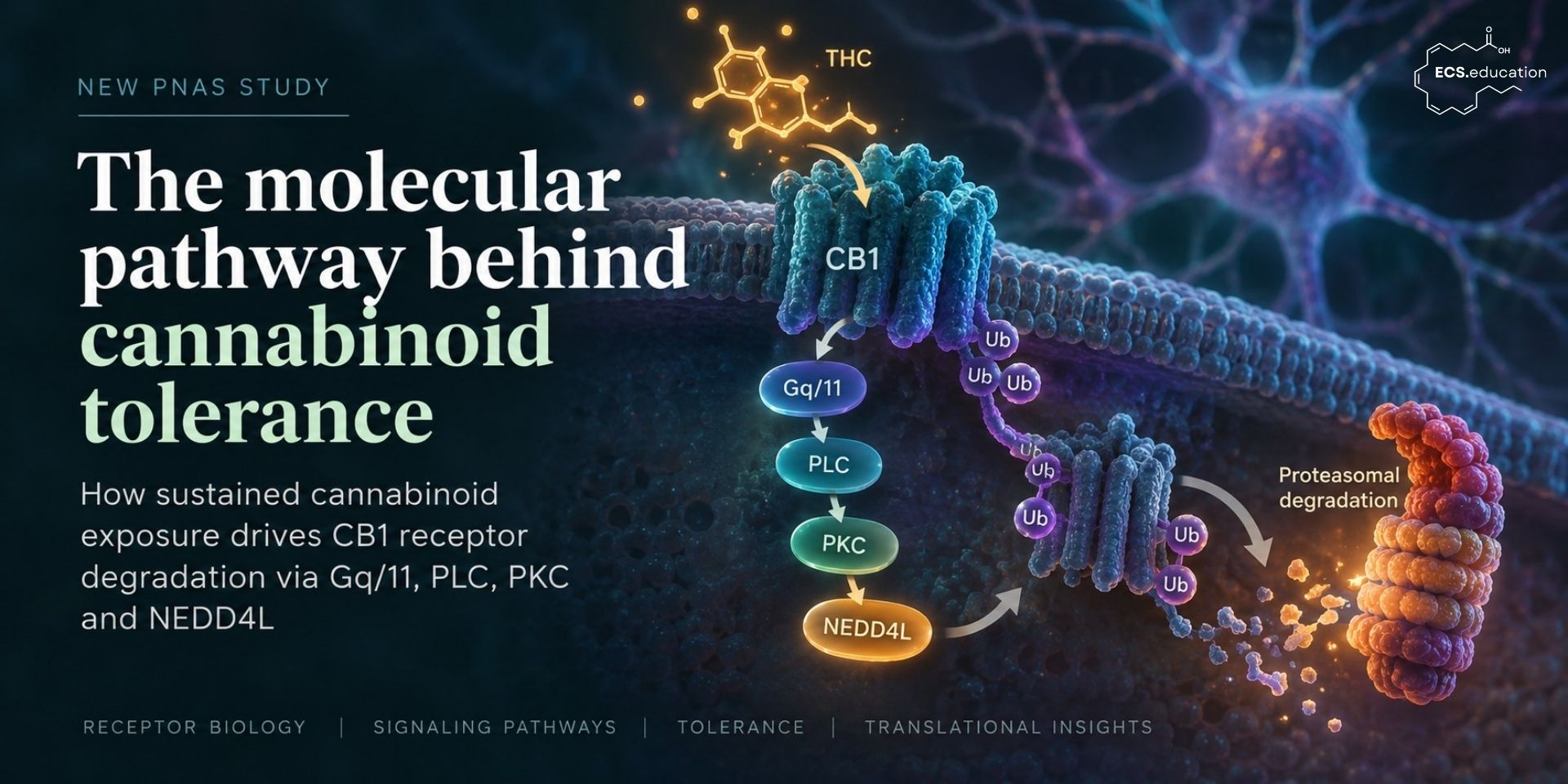
A new PNAS study identifies a previously underappreciated Gq/11–PLC–PKC–NEDD4L pathway that marks CB1 receptors for proteasomal degradation. The findings help explain how repeated THC exposure can reduce receptor availability and contribute to cannabinoid tolerance.
Tag: CB1 Receptor
Commentary
Read more
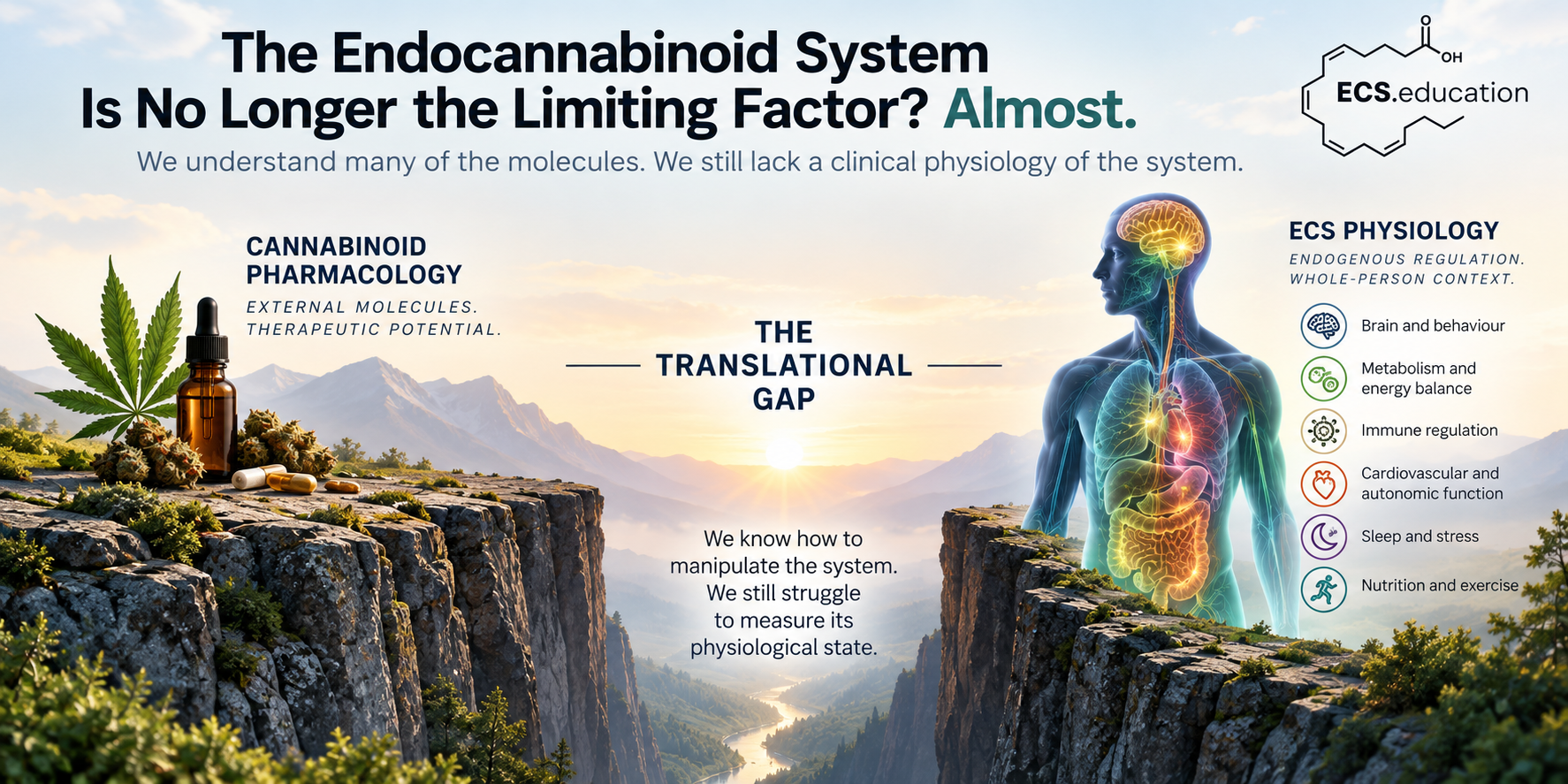
The Endocannabinoid System Is No Longer the Limiting Factor? Almost.
A new review argues that policy and stigma, rather than lack of ECS science, are now the main barriers to cannabinoid medicine. I agree, but an important gap remains: medicine still lacks a practical clinical physiology of the endocannabinoid system.
Endocannabinoid System (ECS)
Read more
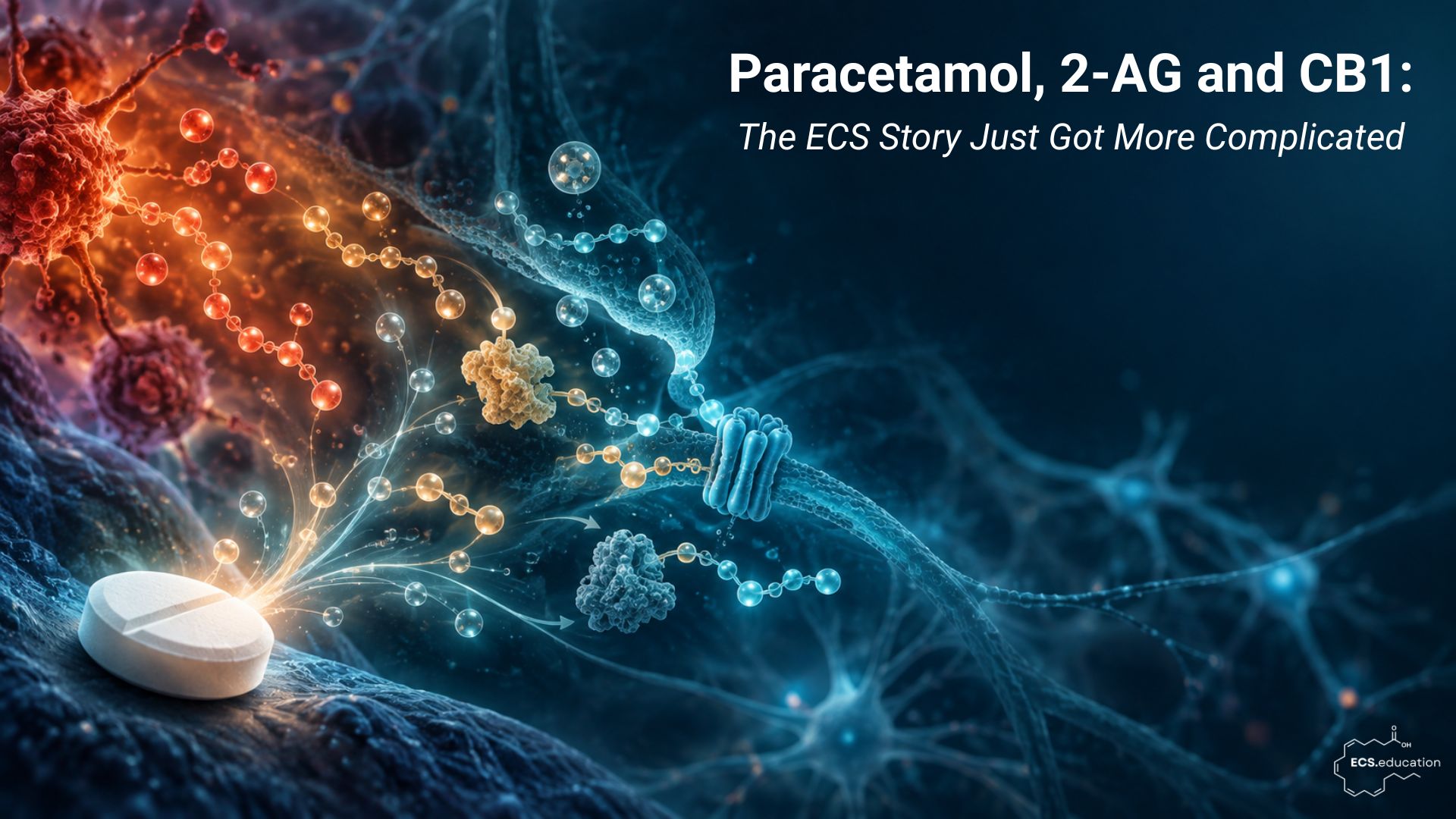
Paracetamol, 2-AG and CB1: The ECS Story Just Got More Complicated
New mouse research reveals that paracetamol’s pain-relieving effects depend on CB1 receptors and the enzymes DAGL and MAGL, while reshaping prostaglandin and wider lipid signalling.
Endocannabinoid System (ECS)
Read more
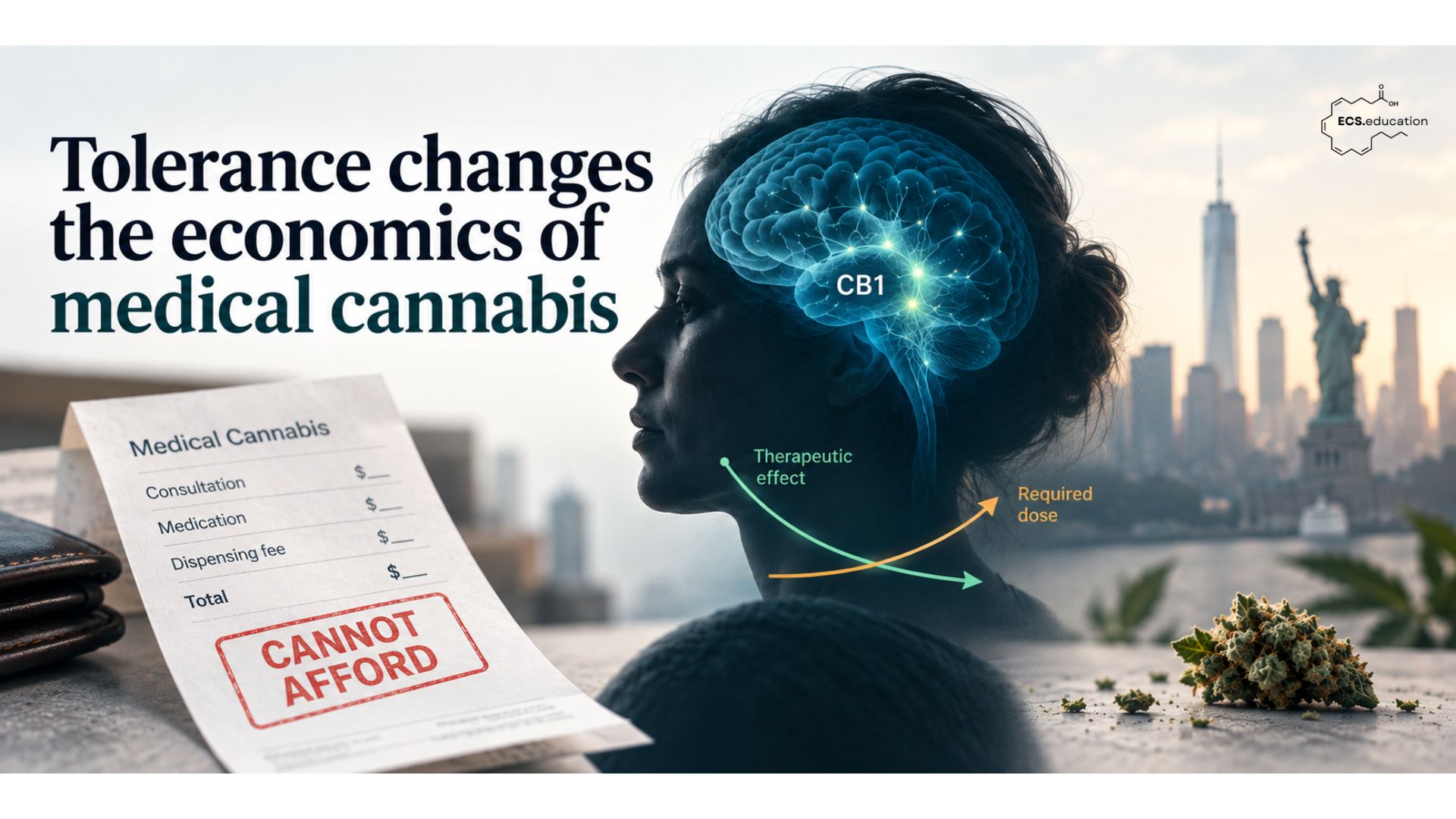
Tolerance changes the economics of medical cannabis
A New York study found that 49% of surveyed medical cannabis patients could not afford enough cannabis to manage their symptoms. This article examines a missing variable in the affordability debate: whether chronic high-THC exposure, tolerance and CB1 adaptation may increase the amount of cannabis required for sustained therapeutic effect.
Announcements
Read more
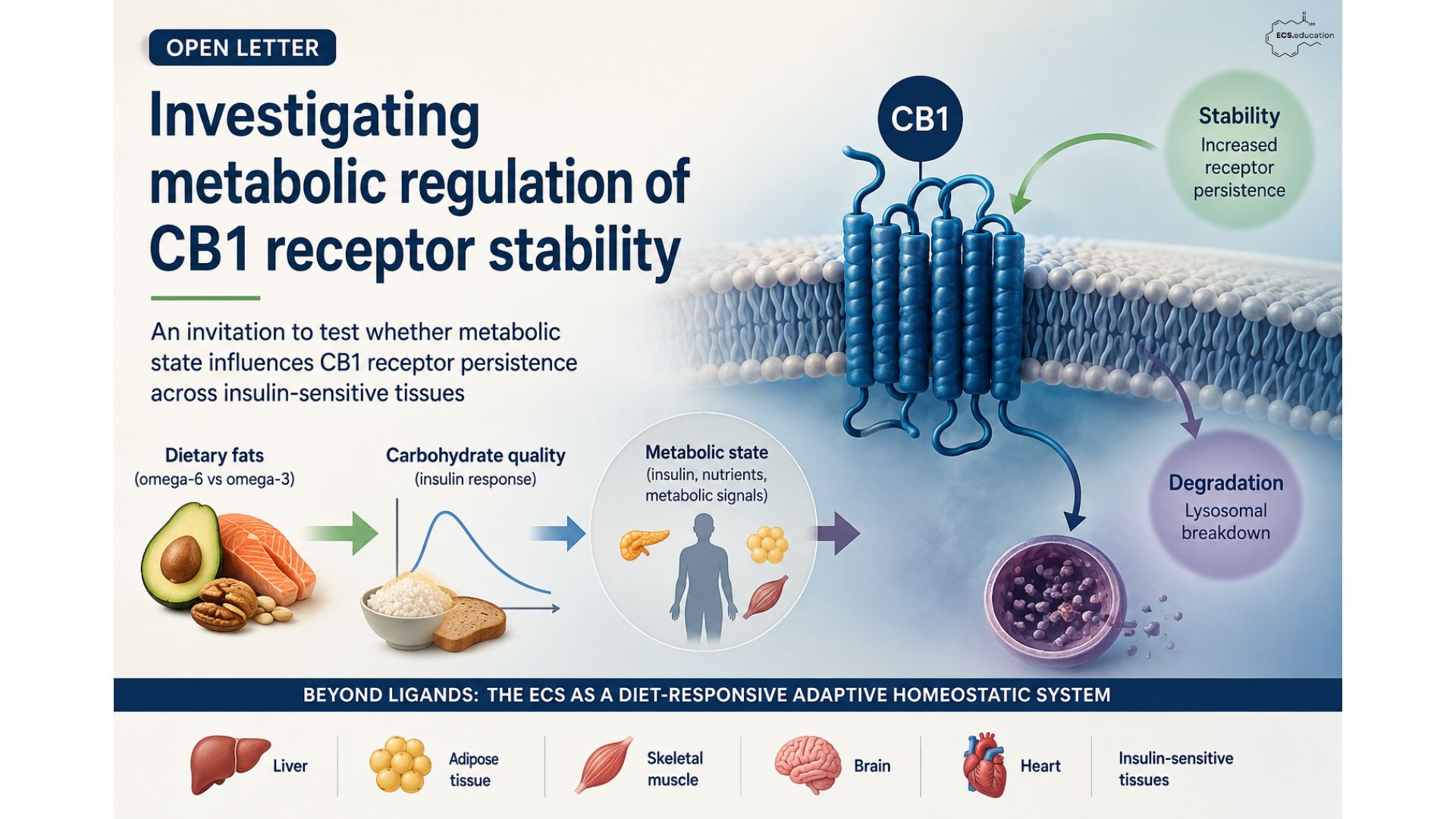
Open letter to CB1 researchers
An open letter inviting researchers to investigate whether metabolic state influences CB1 receptor stability, trafficking and degradation across insulin-sensitive tissues, and whether this represents a broader principle of endocannabinoid system regulation.
Endocannabinoid System (ECS)
Read more
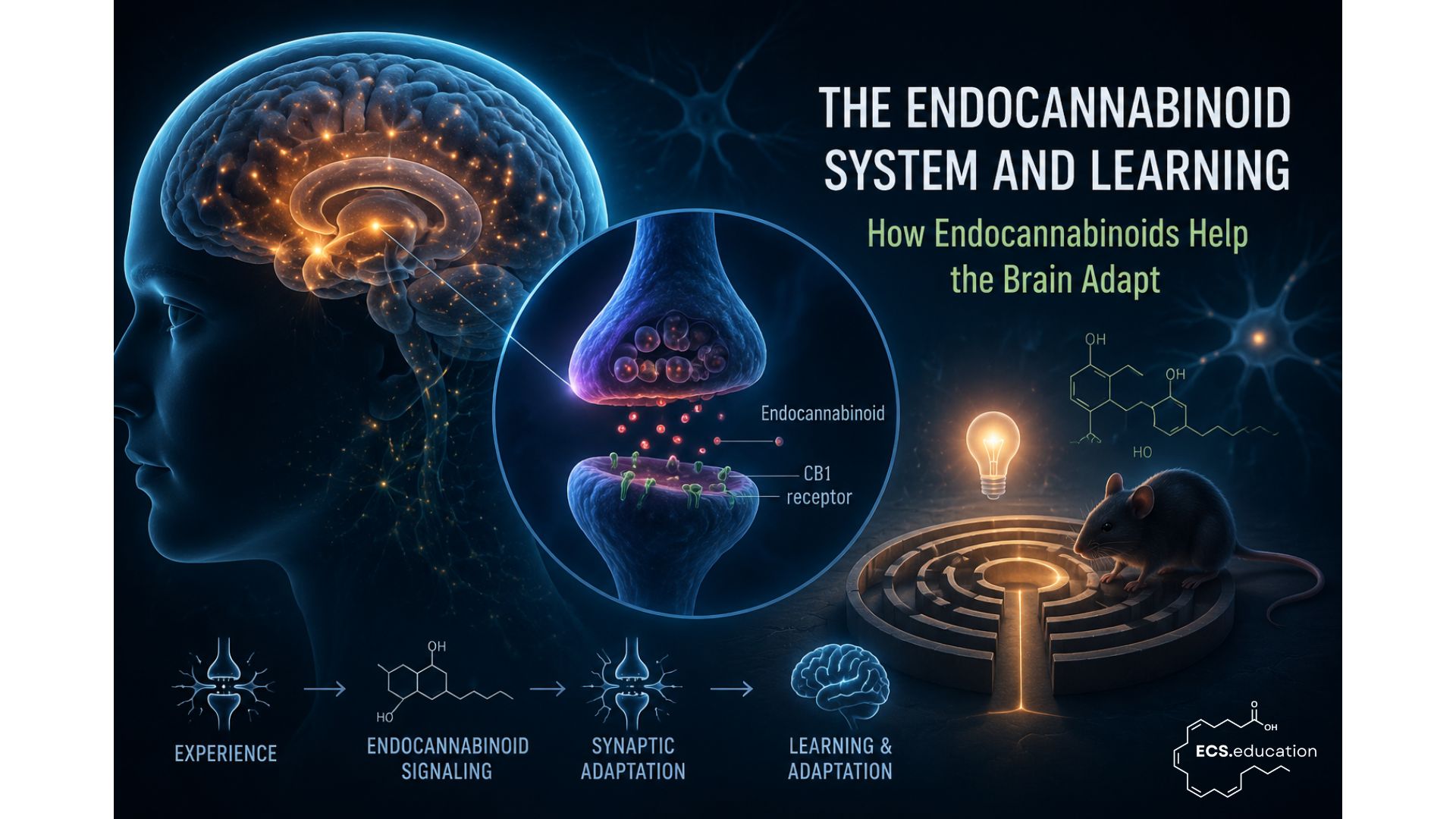
How the Endocannabinoid System Helps the Brain Adapt and Learn
The Endocannabinoid System and the Biology of Learning: How Endocannabinoids Help the Brain Adapt Why one-shot learning matters for survival Imagine touching a hot surface for the first time. The experience lasts only a moment, but the lesson can last a lifetime. The brain does not need repeated exposure to…
Endocannabinoid System (ECS)

Read more
ECS Literacy in Medicine: Why It Makes Better Doctors
What happens to clinical reasoning when a physician understands the endocannabinoid system? Seven conditions, two kinds of doctors, and the reasoning gap that a better curriculum could close.
Endocannabinoid System (ECS)
Read more
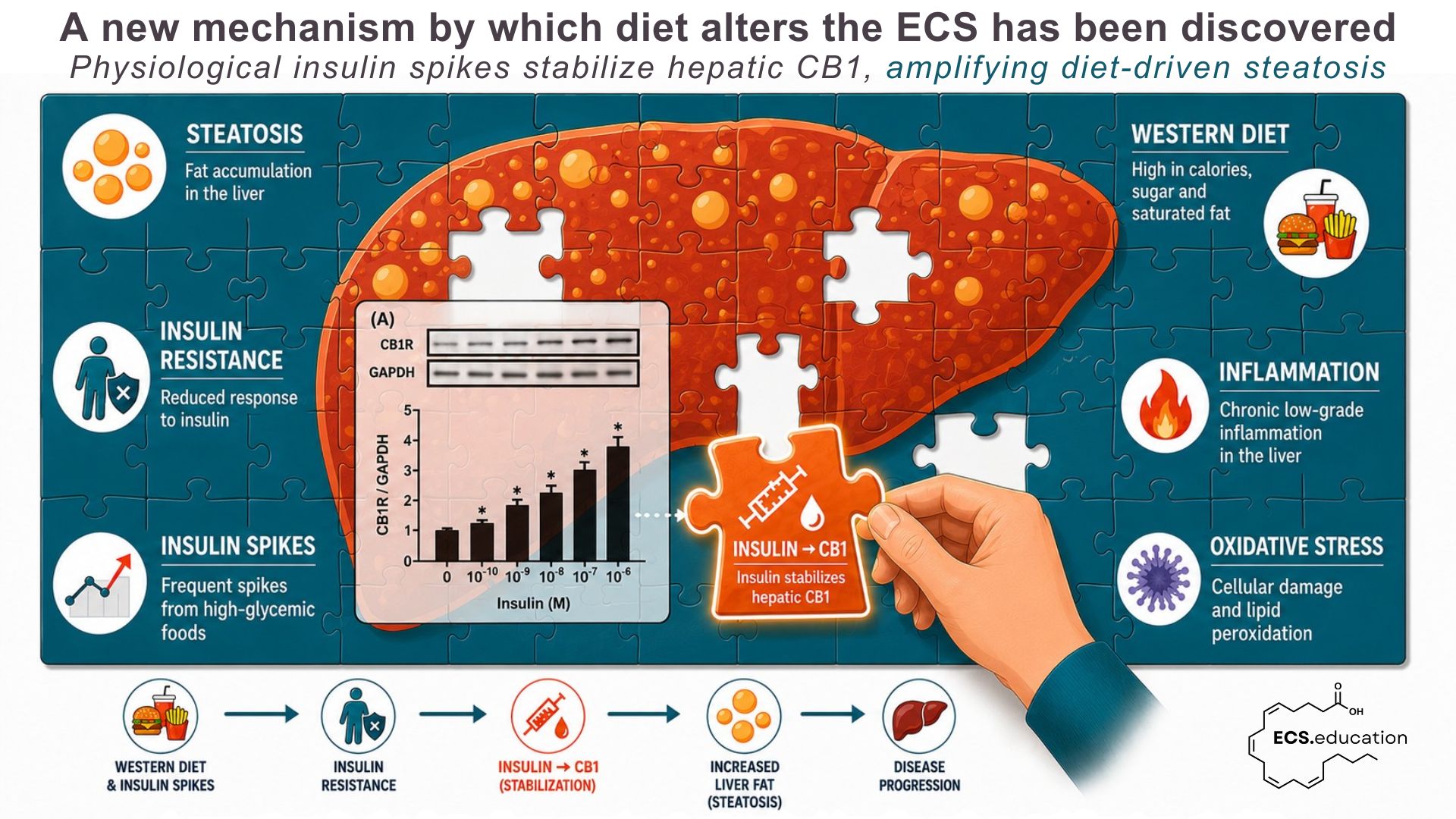
How Poor Diet and Insulin Spikes Disrupt the Endocannabinoid System and Drive Fatty Liver
Scientists have identified a new mechanism linking everyday diet to endocannabinoid system (ECS) dysfunction: normal post‑meal insulin spikes can increase CB1 receptors in the liver by about 50% by slowing their lysosomal recycling. Together with an omega‑6‑heavy fat intake, this amplifies diet‑driven steatosis and helps explain how common foods drive fatty liver disease.
Critical analysis
Read more
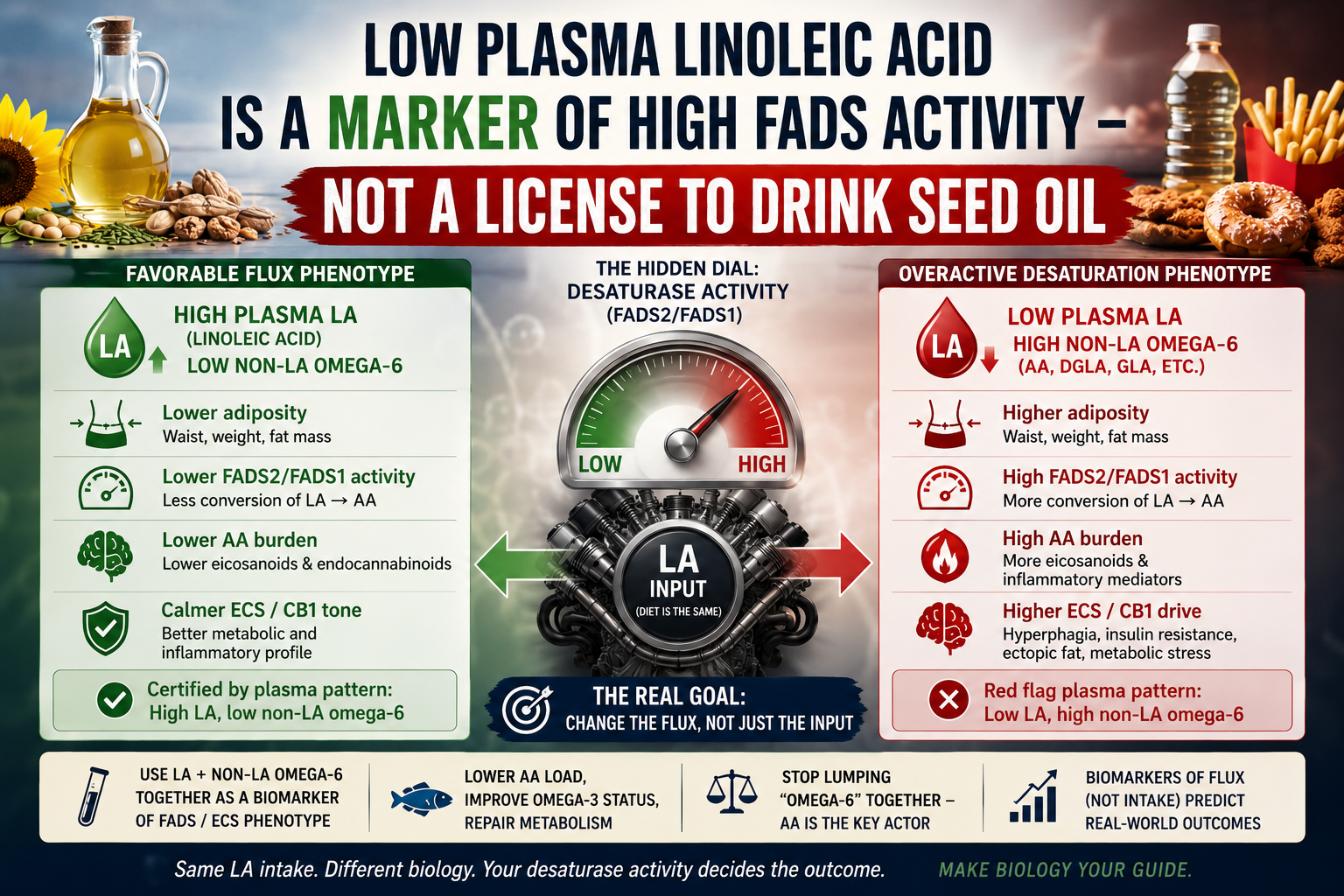
Low plasma linoleic acid is a marker of high FADS activity – not a license to drink seed oil
A new UK Biobank paper on omega‑6 and adiposity just landed, and if you only read the abstract, you’d think the story was simple: higher linoleic acid (LA) in plasma is “protective” against obesity and therefore we should be recommending more LA‑rich oils to everyone. Look one level deeper, and…
Critical analysis
Read more
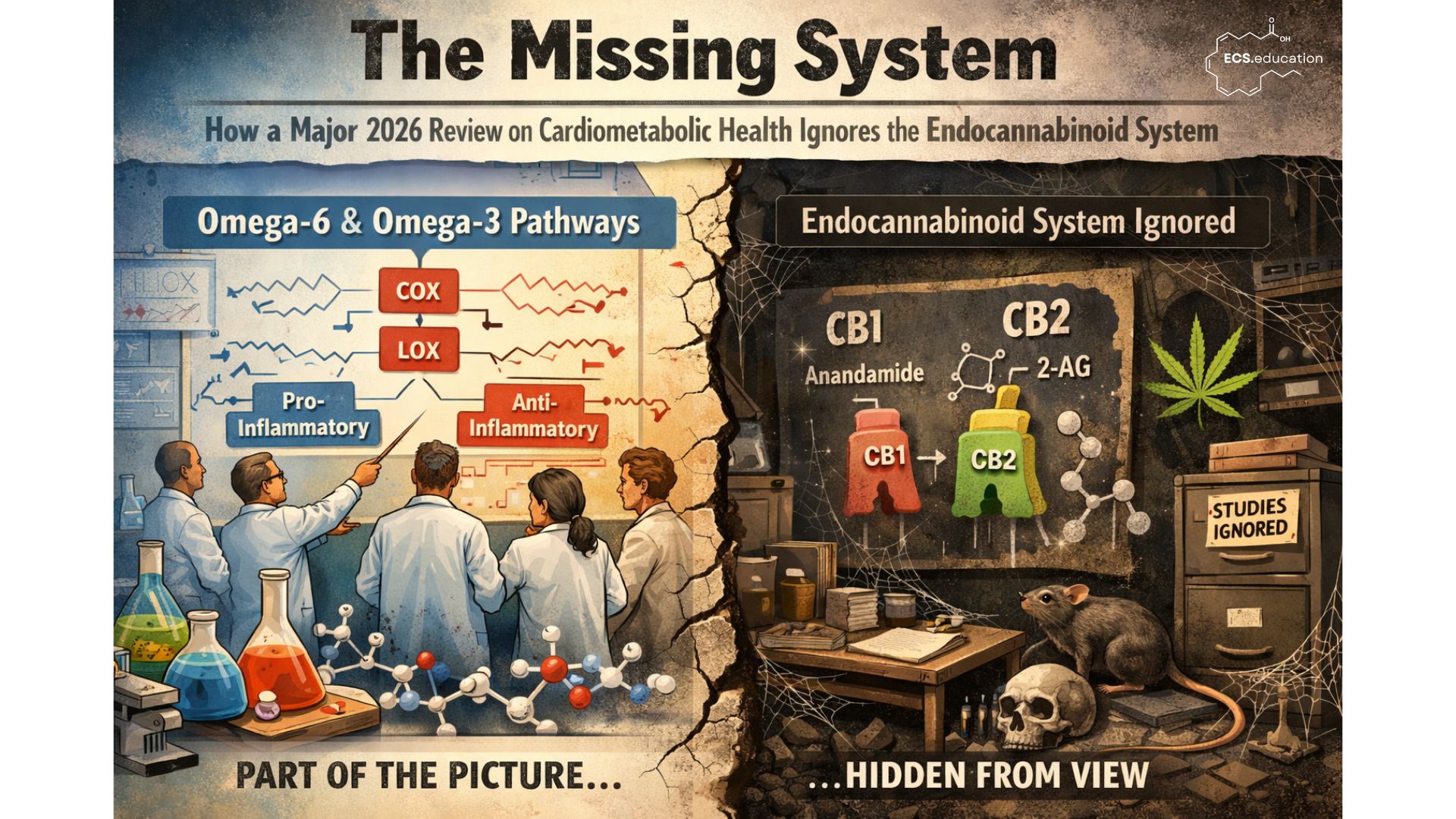
The Missing System: How a Major 2026 Review on Cardiometabolic Health Ignores the Endocannabinoid System
Last August, I wrote about a troubling pattern in inflammation research: brilliant scientists studying arachidonic acid metabolism while remaining “blissfully unaware that half the arachidonic acid story exists in a parallel research universe.” I documented how eicosanoid researchers and endocannabinoid scientists study the same substrate, same concentration ranges, same tissues—yet publish in…