
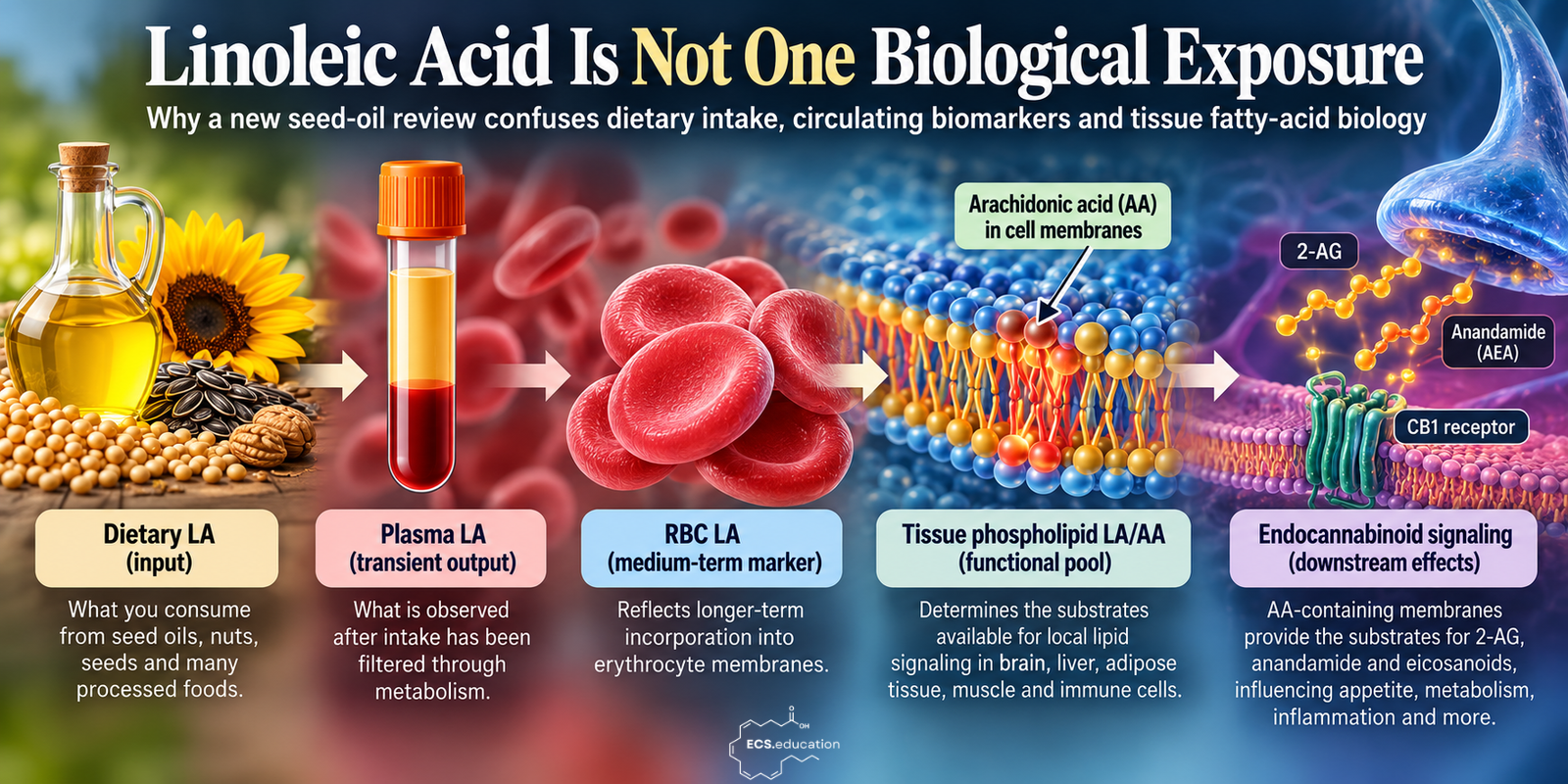
A new review argues that higher linoleic acid exposure may be beneficial. But dietary intake, circulating LA and tissue fatty-acid composition are not the same biological exposure. This article explains why that distinction matters for arachidonic acid, membrane biology and the endocannabinoid system.
Category: Fatty Acid Research
Fatty Acid Research
Read more
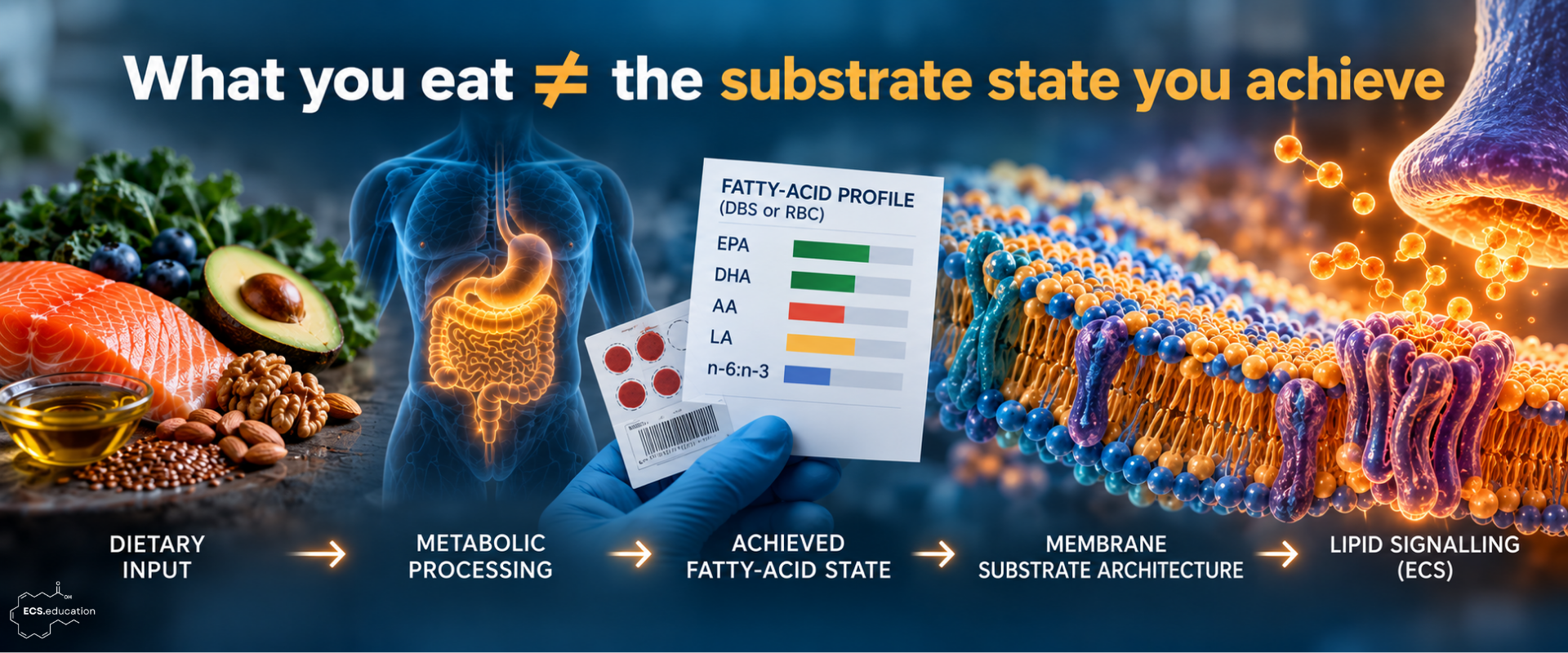
Your ECS Runs on What Your Metabolism Does With What You Eat
New human tracer data show that the same dietary fatty-acid exposure can produce very different biological outcomes depending on metabolic state. For the endocannabinoid system, this strengthens the case for measuring achieved DBS/RBC fatty-acid profiles rather than assuming intake equals substrate availability.
Endocannabinoid System (ECS)
Read more
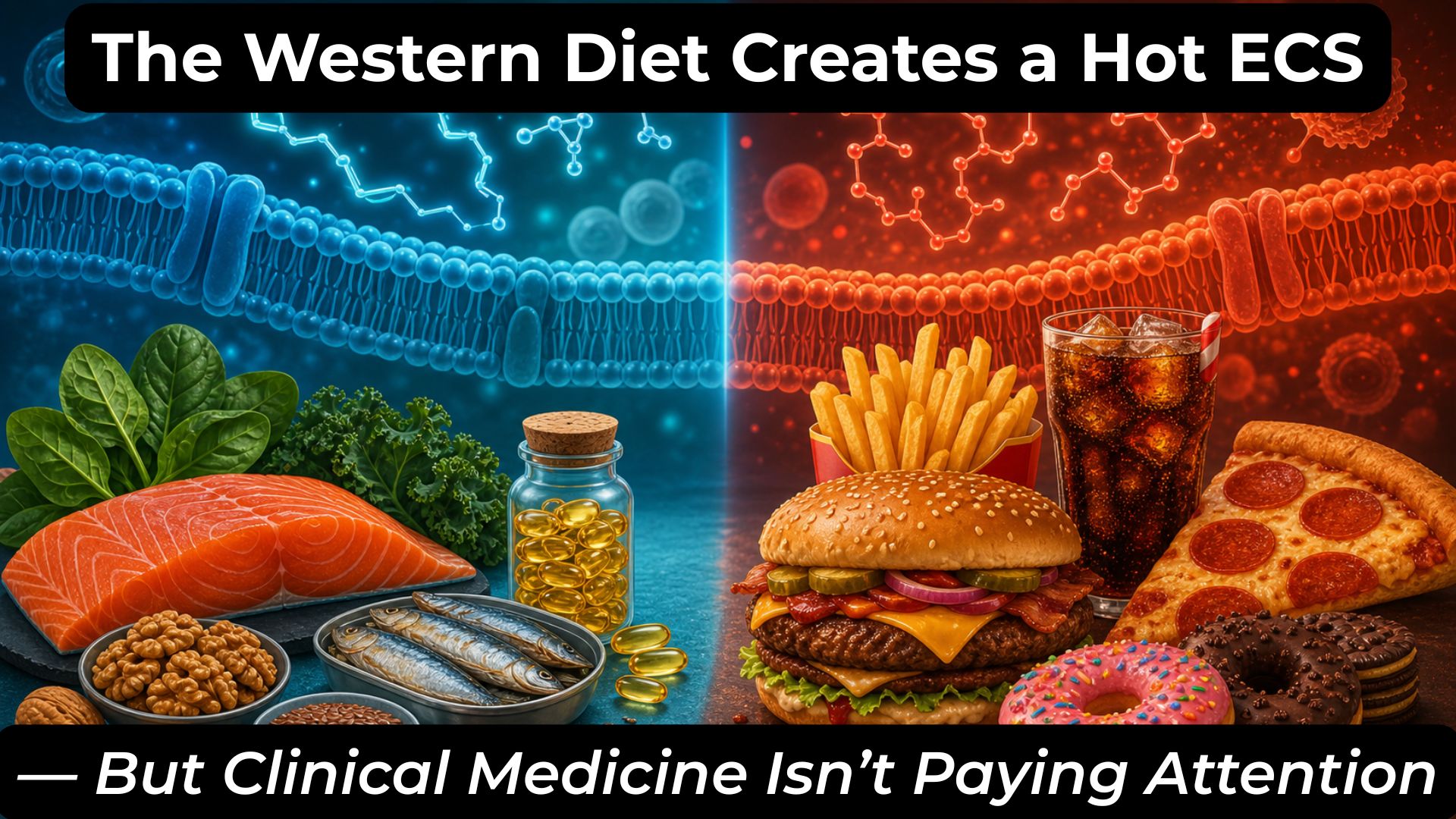
The Western Diet Has a Hot ECS — but Clinical Medicine Isn’t Paying Attention
A new study (Powers et al., 2026) just confirmed something that should change the way we talk about diet and health—not just heart health, but brain health, metabolism, and, if you’ve been following this site, endocannabinoid health, too. When you look at red‑blood‑cell fatty acids, you’re not seeing a niche…
Endocannabinoid System (ECS)
Read more
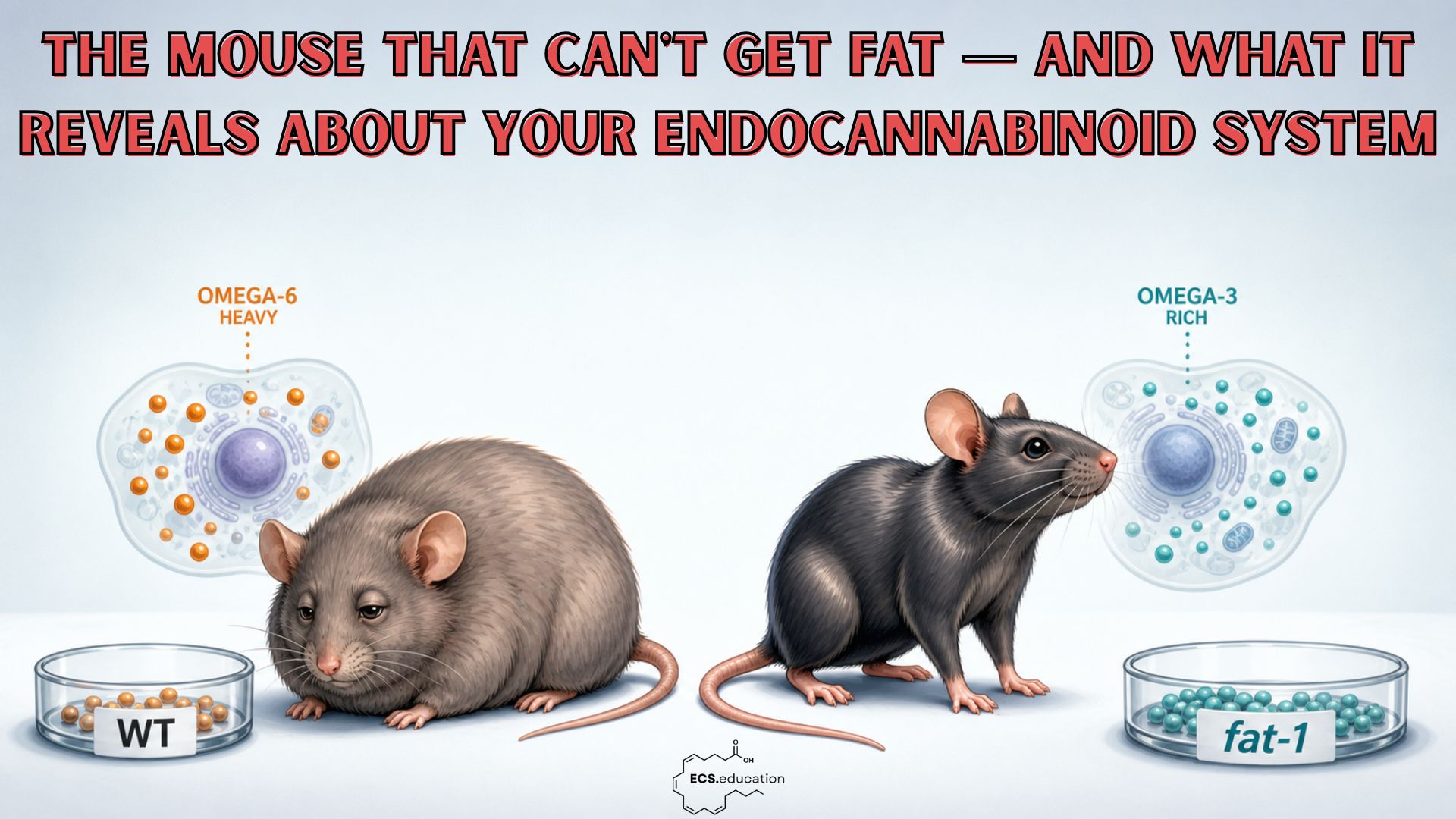
The Mouse That Can’t Get Fat — and What It Reveals About Your Endocannabinoid System
There is a mouse that refuses to follow the script. Feed it a high-fat Western diet for sixteen months and it stays leaner, its gut stays tighter, its blood stays cleaner, and its cells age more slowly. Not because of a drug. Because of one change: the balance of fats…
Critical analysis
Read more
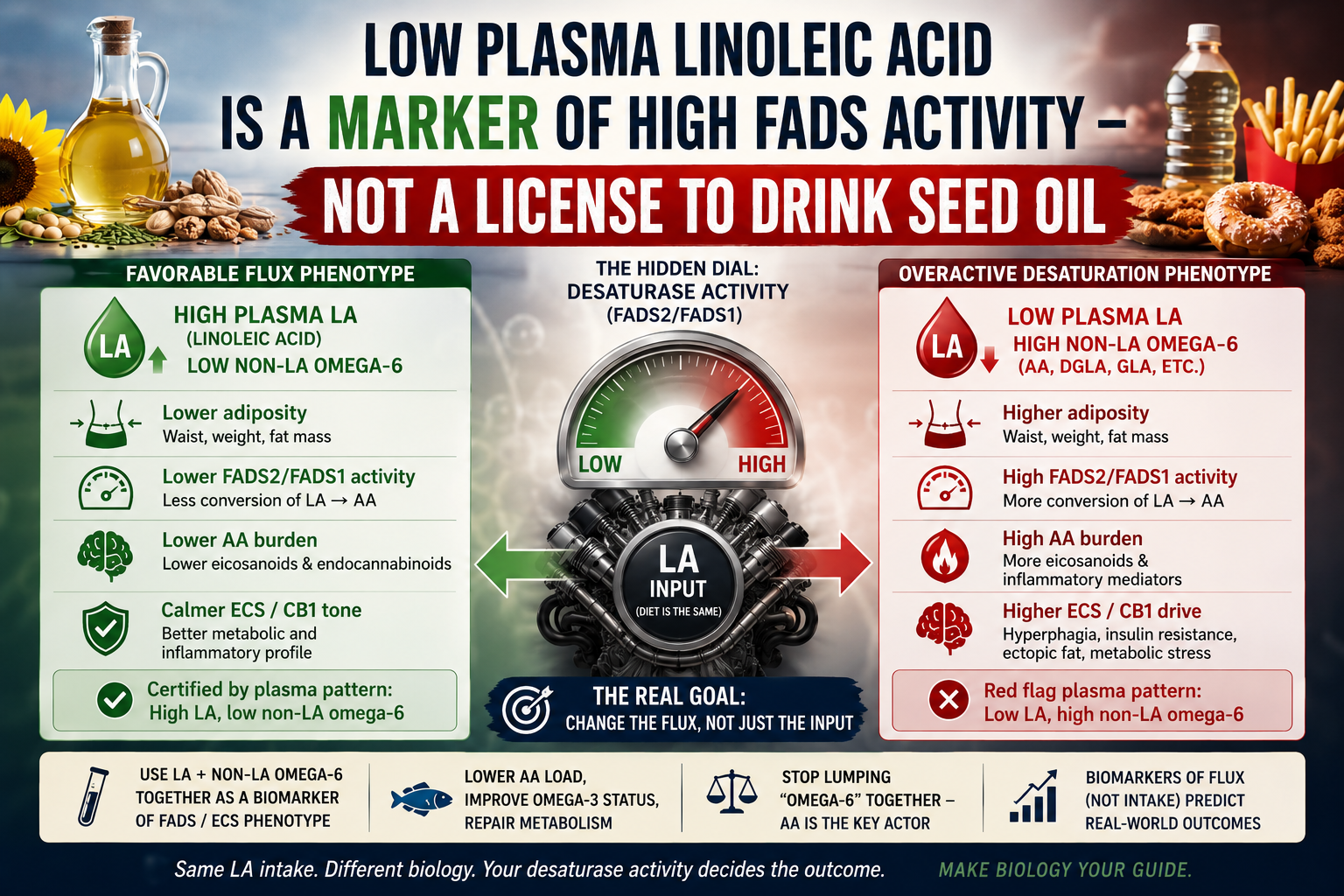
Low plasma linoleic acid is a marker of high FADS activity – not a license to drink seed oil
A new UK Biobank paper on omega‑6 and adiposity just landed, and if you only read the abstract, you’d think the story was simple: higher linoleic acid (LA) in plasma is “protective” against obesity and therefore we should be recommending more LA‑rich oils to everyone. Look one level deeper, and…
Endocannabinoid System (ECS)
Read more
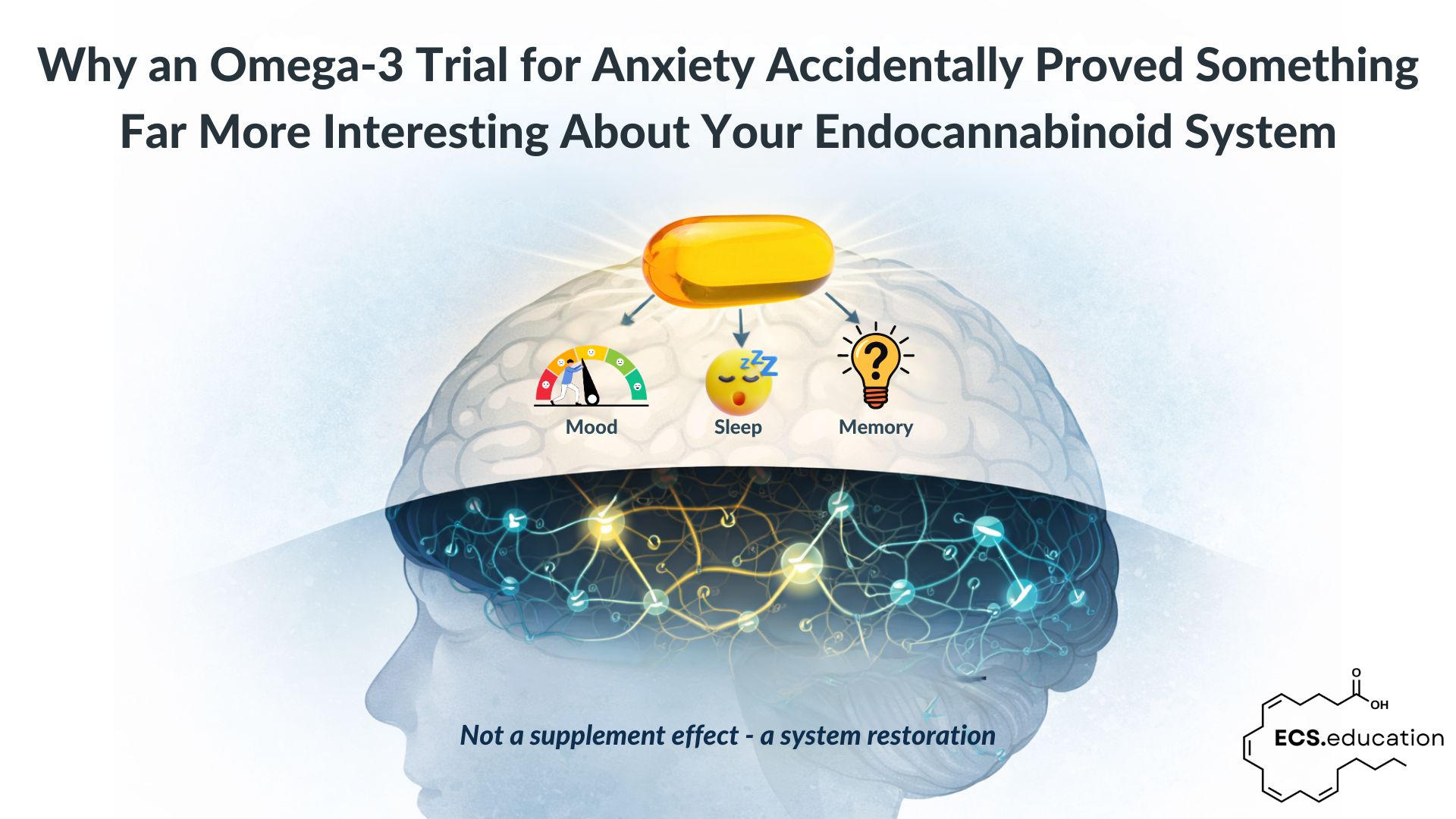
Why an Omega-3 Trial for Anxiety Accidentally Proved Something Far More Interesting About Your Endocannabinoid System
A new randomised, double-blind, placebo-controlled trial published in the Journal of Affective Disorders set out to test whether omega-3 supplementation improves stress, anxiety, depression, sleep quality, and memory in people with severe psychological distress (Azhar et al., 2025). The trial was conducted on a Saudi population, was reasonably well-designed, and produced striking…
Critical analysis

Read more
ECS and Exercise: The Invisible Architecture of Fitness
The body keeps secrets in its blood. On a Tuesday morning in late 2024, 491 men and women stepped onto treadmills and cycle ergometers across several research institutions. None of them knew they were about to reveal something profound about the mechanics of human fitness. They simply pushed themselves toward…
Commentary
Read more
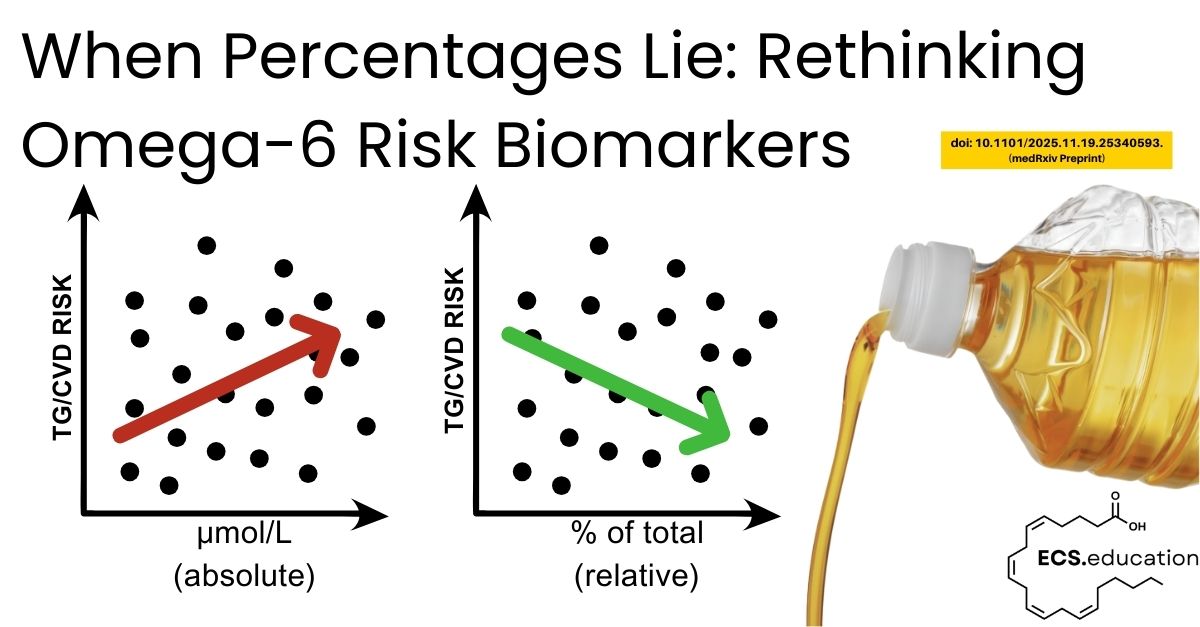
When Percentages Lie: Rethinking Omega‑6 (LA & AA) Risk Biomarkers and Endocannabinoid Substrates
The blind spot in fatty acid epidemiology Since the 1960s, most circulating fatty acid data have been reported as “percent of total” rather than as absolute concentrations, because gas chromatography methods naturally produce compositional peak areas that are easy to turn into percentages (Sergeant et al., 2016; Lagerstedt et al.,…
Endocannabinoid System (ECS)

Read more
The Biochemical Plateau: Rethinking Linoleic Acid and Heart Health
The Linoleic Acid Paradox: Protection or Peril? For decades, linoleic acid has enjoyed a privileged place in nutritional policy. It is the cornerstone of “heart-healthy” messaging, the molecular mascot of seed oils, and the quiet passenger in countless processed foods. But beneath this reputation lies a paradox: the very molecule…
Critical analysis
Read more
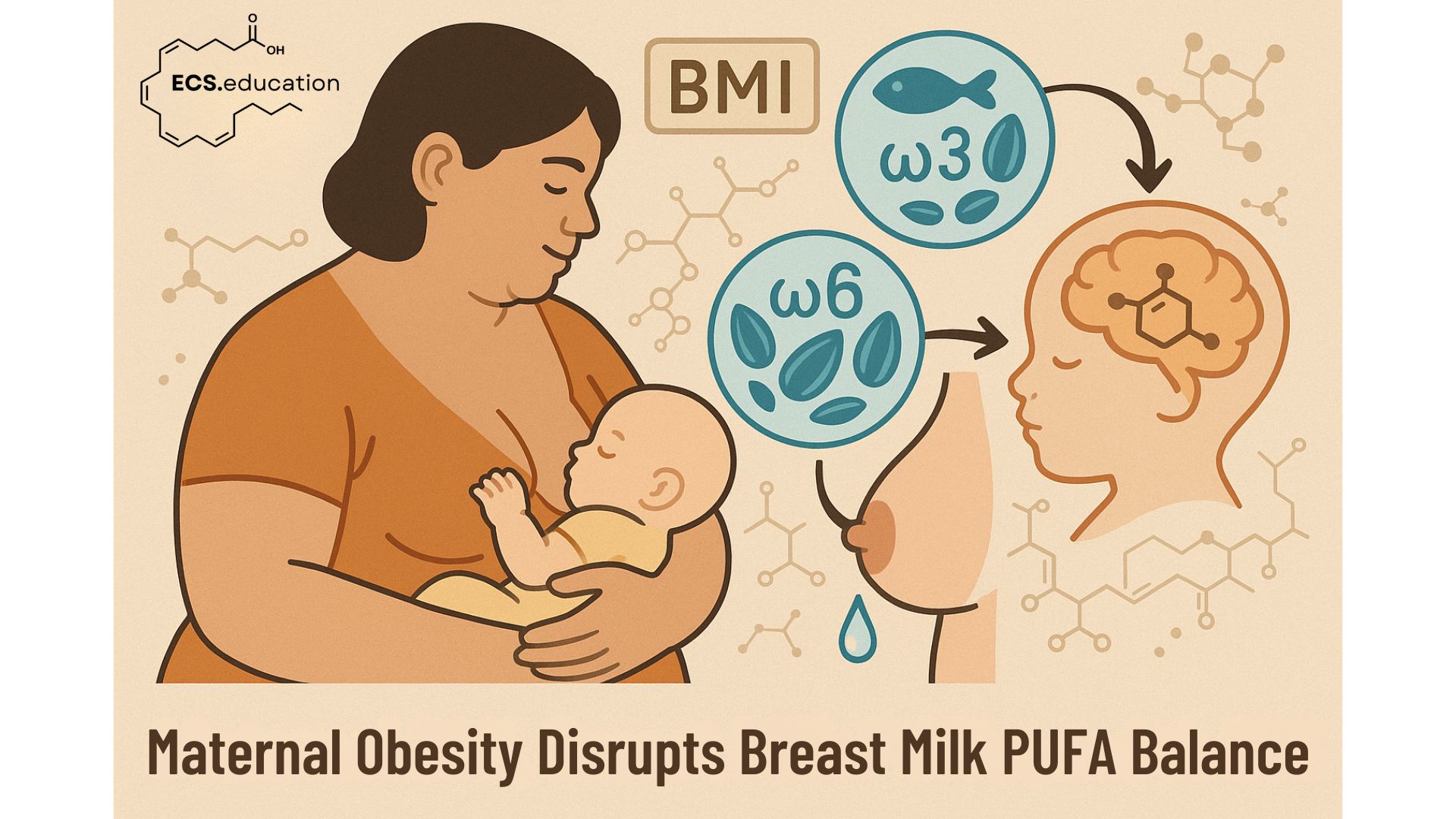
Maternal Obesity Disrupts Breast Milk PUFA Balance: New Insights into ECS Programming for Infants
Let’s dive right in. In my earlier posts on ECS.education, we’ve talked about how maternal adiposity shapes breast milk’s endocannabinoid system (ECS) and influences infant health. The May 23 piece on ‘The Adiposity Filter: How Maternal Body Fat Reshapes Milk PUFAs for Your Baby’s ECS‘ highlighted shifts in endocannabinoid profiles…