• About WordPress
    • WordPress.org
    • Documentation
    • Learn WordPress
    • Support
    • Feedback
  • Log In
  • Register
Skip to content
Endocannabinoid Science Education Endocannabinoid Science Education

ECS is Physiology

  • What?
  • Why?
  • How?
  • Where?
  • Contact
  • Advisory Board
  • Forums
  • Blog
  • Bio
  • ECS Explained
Endocannabinoid Science Education

ECS is Physiology

Tag: ECS physiology

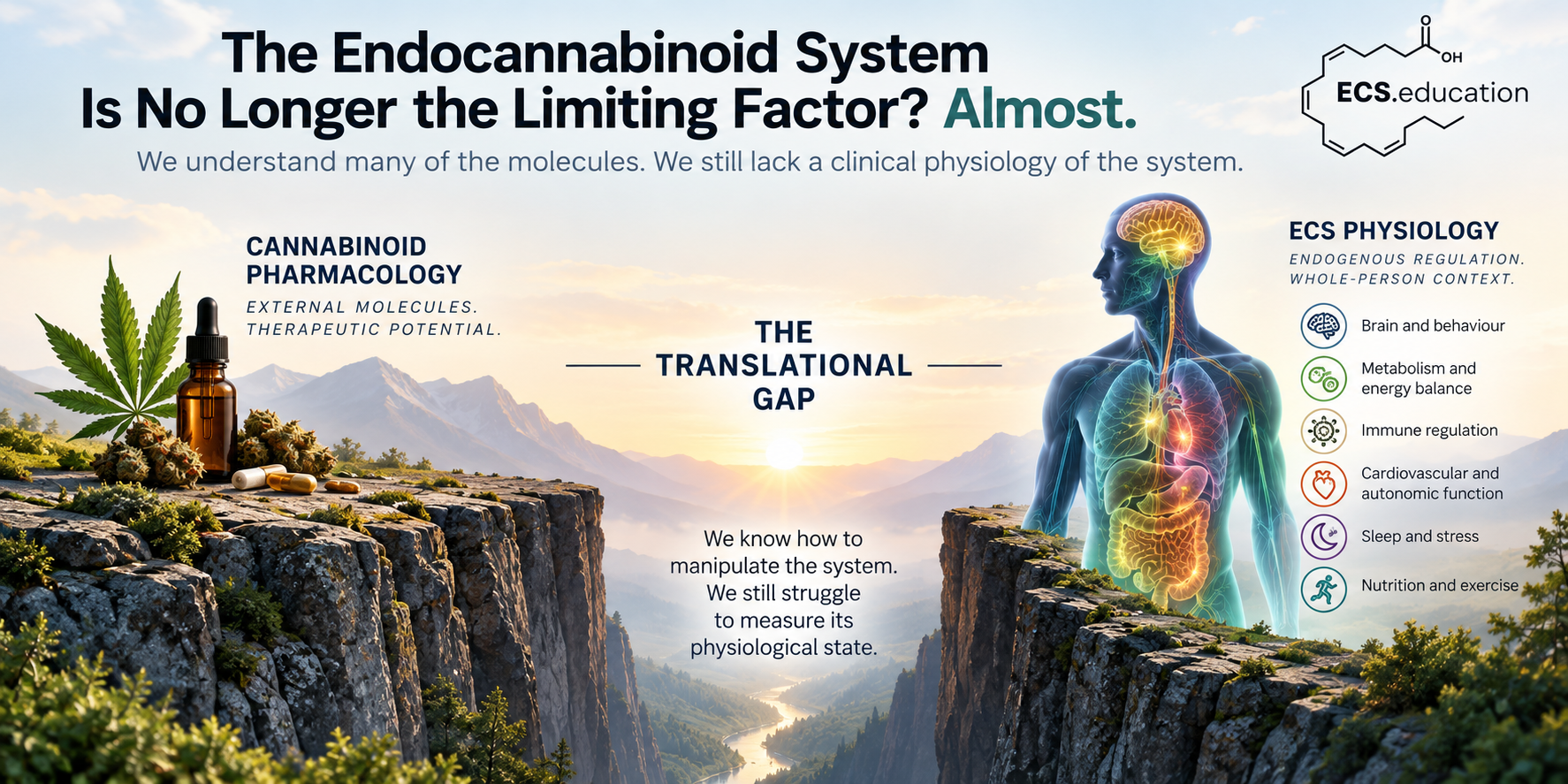
Commentary llustration comparing cannabinoid pharmacology with ECS physiology across a translational gap, highlighting the need to measure the functional state of the endocannabinoid system in humans.

The Endocannabinoid System Is No Longer the Limiting Factor? Almost.

Posted on September 14, 2026September 14, 2026 By Stefan Broselid

A new review argues that policy and stigma, rather than lack of ECS science, are now the main barriers to cannabinoid medicine. I agree, but an important gap remains: medicine still lacks a practical clinical physiology of the endocannabinoid system.

Read more
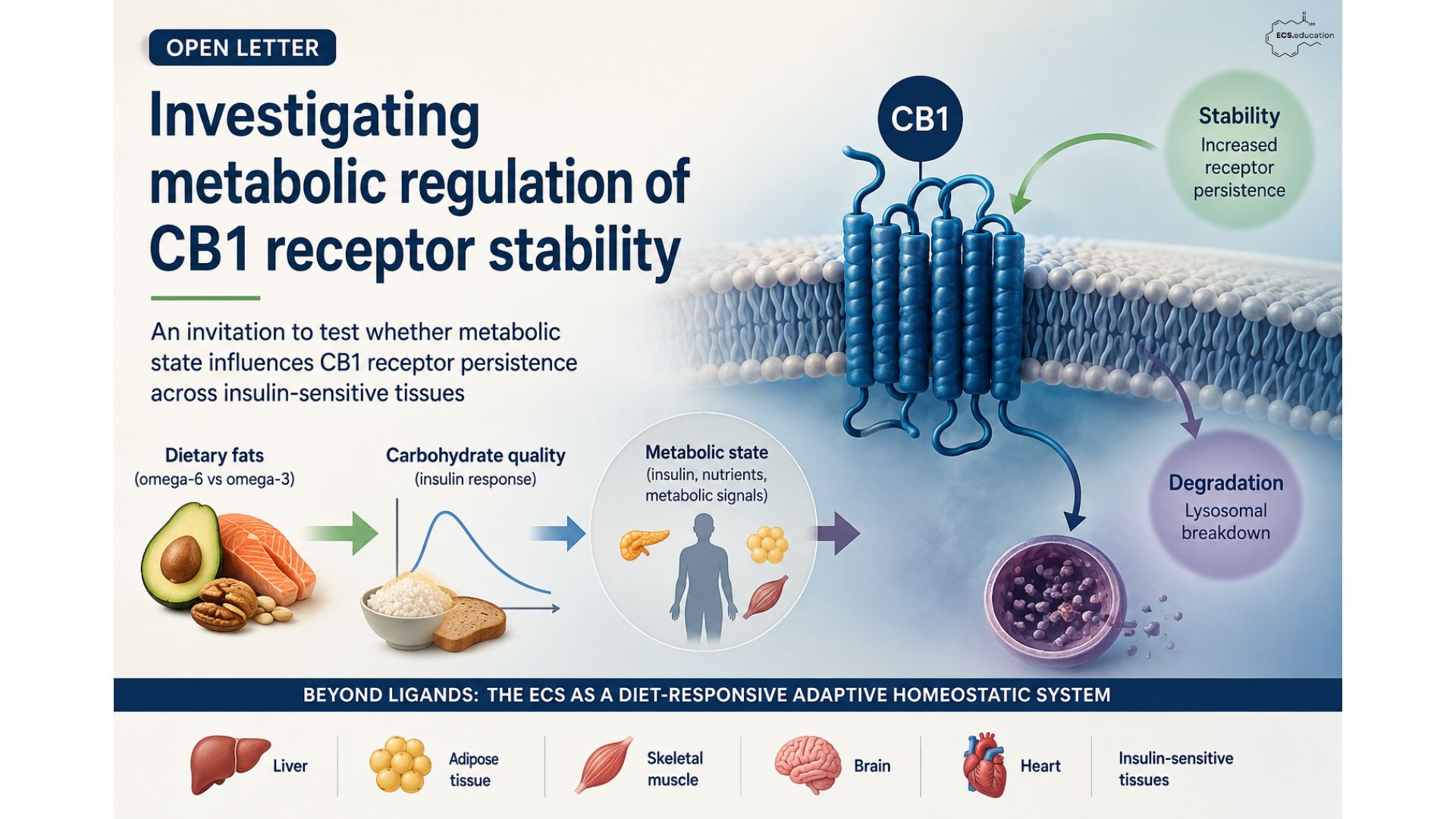
Announcements Scientific illustration showing a CB1 receptor in the cell membrane, with metabolic state influencing receptor stability and lysosomal degradation. Dietary fat composition and carbohydrate-driven insulin responses are shown as upstream factors, with liver, adipose tissue, skeletal muscle, brain, and heart representing insulin-sensitive tissues.

Open letter to CB1 researchers

Posted on September 3, 2026September 3, 2026 By Stefan Broselid

An open letter inviting researchers to investigate whether metabolic state influences CB1 receptor stability, trafficking and degradation across insulin-sensitive tissues, and whether this represents a broader principle of endocannabinoid system regulation.

Read more
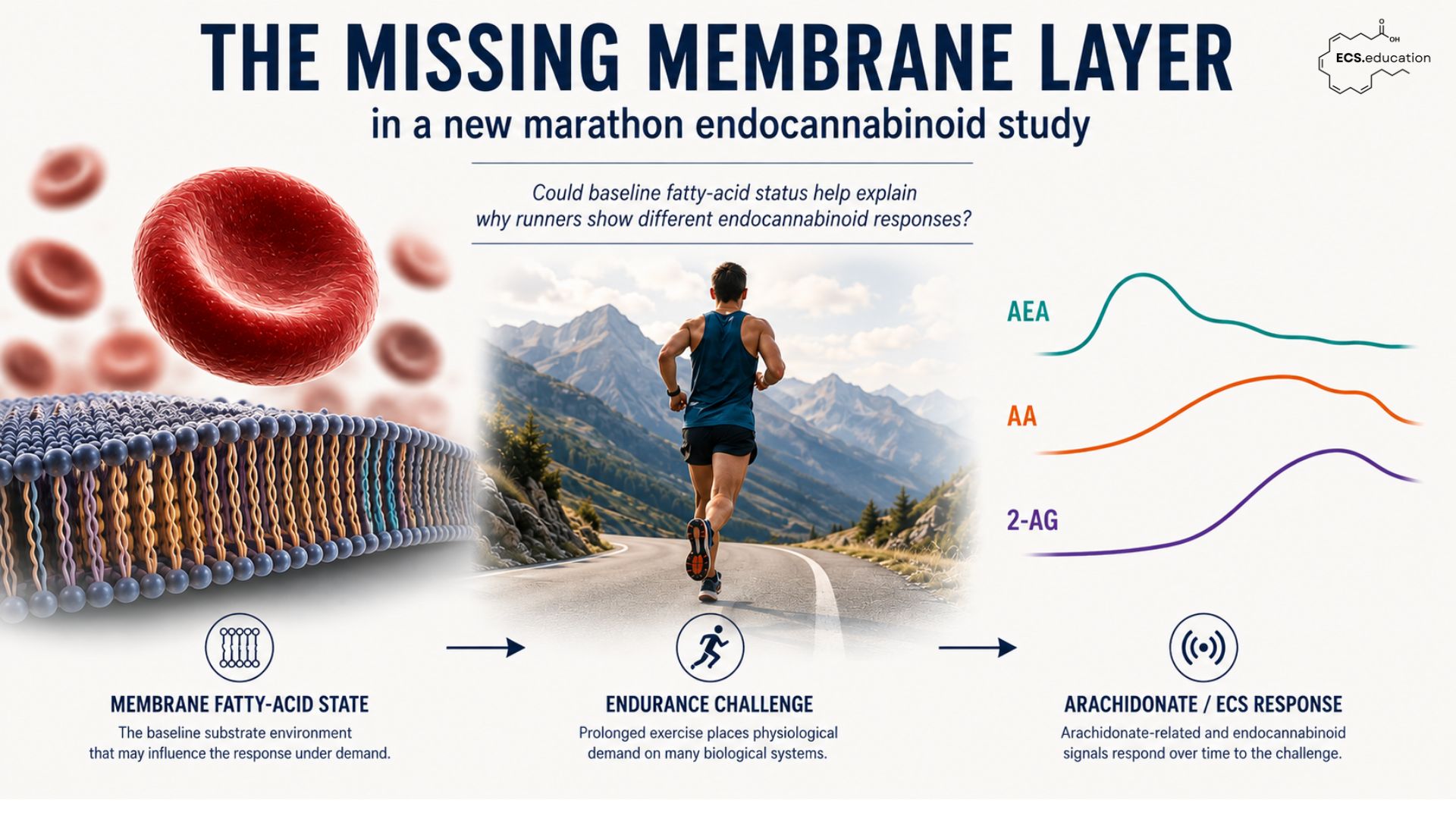
Commentary Conceptual illustration showing membrane fatty-acid state as a baseline biological condition, followed by an endurance running challenge and distinct arachidonate/endocannabinoid responses involving AEA, arachidonic acid and 2-AG. A red blood cell and phospholipid membrane represent longer-term fatty-acid status, a runner represents prolonged exercise, and non-quantitative signal traces represent the time-dependent ECS response. ECS.education logo appears in the upper right.

The missing membrane layer in a new marathon endocannabinoid study

Posted on September 3, 2026September 3, 2026 By Stefan Broselid

A new BMC Medicine study shows that marathon running triggers distinct temporal changes in anandamide, 2-AG and arachidonic acid. The missing piece may be the runners’ membrane fatty-acid state before exercise.

Read more
Commentary Split-screen comparison of enzyme inhibitor effects: Day 1 shows dramatic metabolic improvements (53% insulin drop, 23% reduced food intake) when DAGL and NAPE-PLD are blocked, but Day 7 reveals complete failure as arachidonic acid substrate reroutes to inflammatory COX/LOX pathways, causing weight rebound, inflammation, and glucose dysfunction

The Enzyme Inhibitor Paradox: Why Anti-Obesity Drugs Keep Failing

Posted on October 19, 2025October 19, 2025 By Stefan Broselid

A new study just proved something remarkable: researchers found a way to slash insulin levels by 53% in just two hours. Food intake dropped 23%. Body weight fell within 24 hours. The pharmaceutical industry should be celebrating. Except there’s a problem. By day seven, it stopped working. Completely. The mice…

Read more
©2026 Endocannabinoid Science Education | WordPress Theme by SuperbThemes