
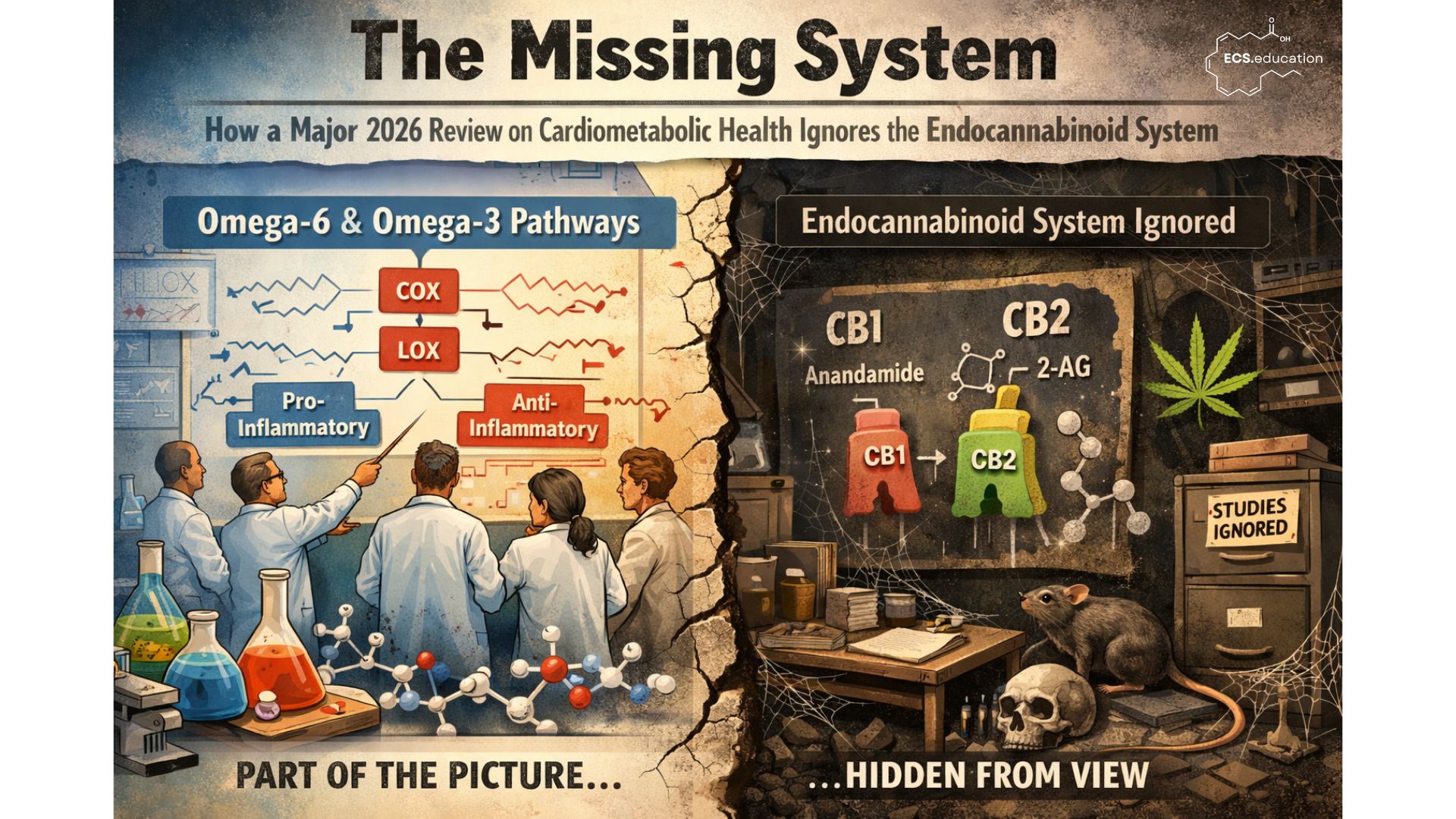
Last August, I wrote about a troubling pattern in inflammation research: brilliant scientists studying arachidonic acid metabolism while remaining “blissfully unaware that half the arachidonic acid story exists in a parallel research universe.” I documented how eicosanoid researchers and endocannabinoid scientists study the same substrate, same concentration ranges, same tissues—yet publish in…
Tag: Arachidonic acid
Endocannabinoid System (ECS)
Read more
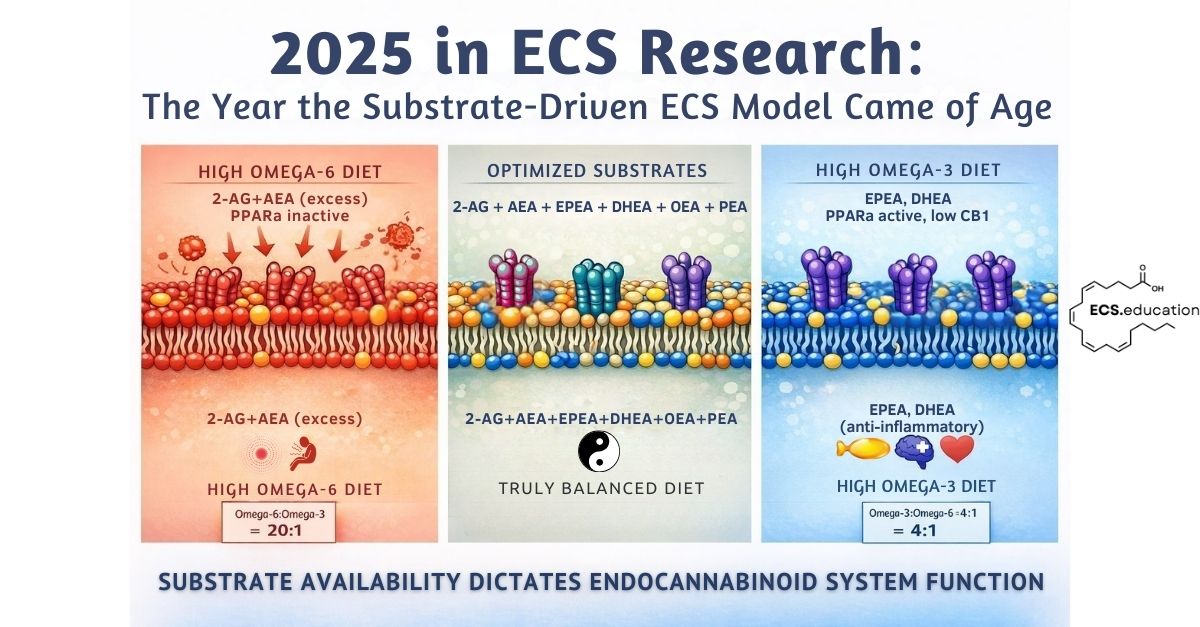
2025 in ECS Research: The Year the Substrate-Driven ECS Model Came of Age
Endocannabinoid system substrate—specifically membrane fatty acid composition—is the primary determinant of CB1 receptor function, not genetics or receptor density. For years, I’ve been making the case that endocannabinoid system function is not primarily about receptor density or genetic variants, it’s about substrate availability. The composition of fatty acids in cell…
Critical analysis

Read more
ECS and Exercise: The Invisible Architecture of Fitness
The body keeps secrets in its blood. On a Tuesday morning in late 2024, 491 men and women stepped onto treadmills and cycle ergometers across several research institutions. None of them knew they were about to reveal something profound about the mechanics of human fitness. They simply pushed themselves toward…
Endocannabinoid System (ECS)

Read more
How Diet and Exercise Modulate the Endocannabinoid System
New Evidence for the Substrate-Driven Model I came across a fascinating recent study this week in Nutritional Neuroscience that really validates something I’ve been thinking about for a while. Lima and colleagues just published research showing how diet and exercise reshape the endocannabinoid system in the brain. It all fits beautifully with what I call the substrate-driven model of ECS function. Let me walk you through what they found and why it matters. The Study: Diet, Exercise & Brain ECS The team took young rats and divided them into groups. Some got standard lab chow, others got a “palatable diet” (think: high in omega-6 fats and sugar, like a Western diet). Some rats didtreadmill training for eight weeks, others didn’t. Then they looked at CB1 receptors and NAPE-PLD enzyme levels in three key brain areas: • Hypothalamus – your energy regulation center • Frontal cortex – handles reward and decision-making…
Autism Spectrum DIsorder (ASD)

Read more
Lipidomic Markers Predict Autism Through ECS Dysfunction
Autism research has long struggled with a fundamental question: why do so many disparate findings (maternal nutrition, inflammation, mitochondrial dysfunction, environmental exposures) all seem to correlate with ASD risk? A new systematic review may have inadvertently provided the unifying answer, though the authors themselves haven’t yet connected the dots. A…
Endocannabinoid System (ECS)

Read more
The Biochemical Plateau: Rethinking Linoleic Acid and Heart Health
The Linoleic Acid Paradox: Protection or Peril? For decades, linoleic acid has enjoyed a privileged place in nutritional policy. It is the cornerstone of “heart-healthy” messaging, the molecular mascot of seed oils, and the quiet passenger in countless processed foods. But beneath this reputation lies a paradox: the very molecule…
Endocannabinoid System (ECS)

Read more
Beyond the ECS: Why you absolutely need a balanced diet
Your body produces its own cannabis-like molecules. Right now, as you read this, your cells are manufacturing compounds that interact with the same receptors that THC targets. But here’s what most people don’t realize: this system extends far beyond what we traditionally call the “endocannabinoid system”, and the food on…
Endocannabinoid System (ECS)
Read more
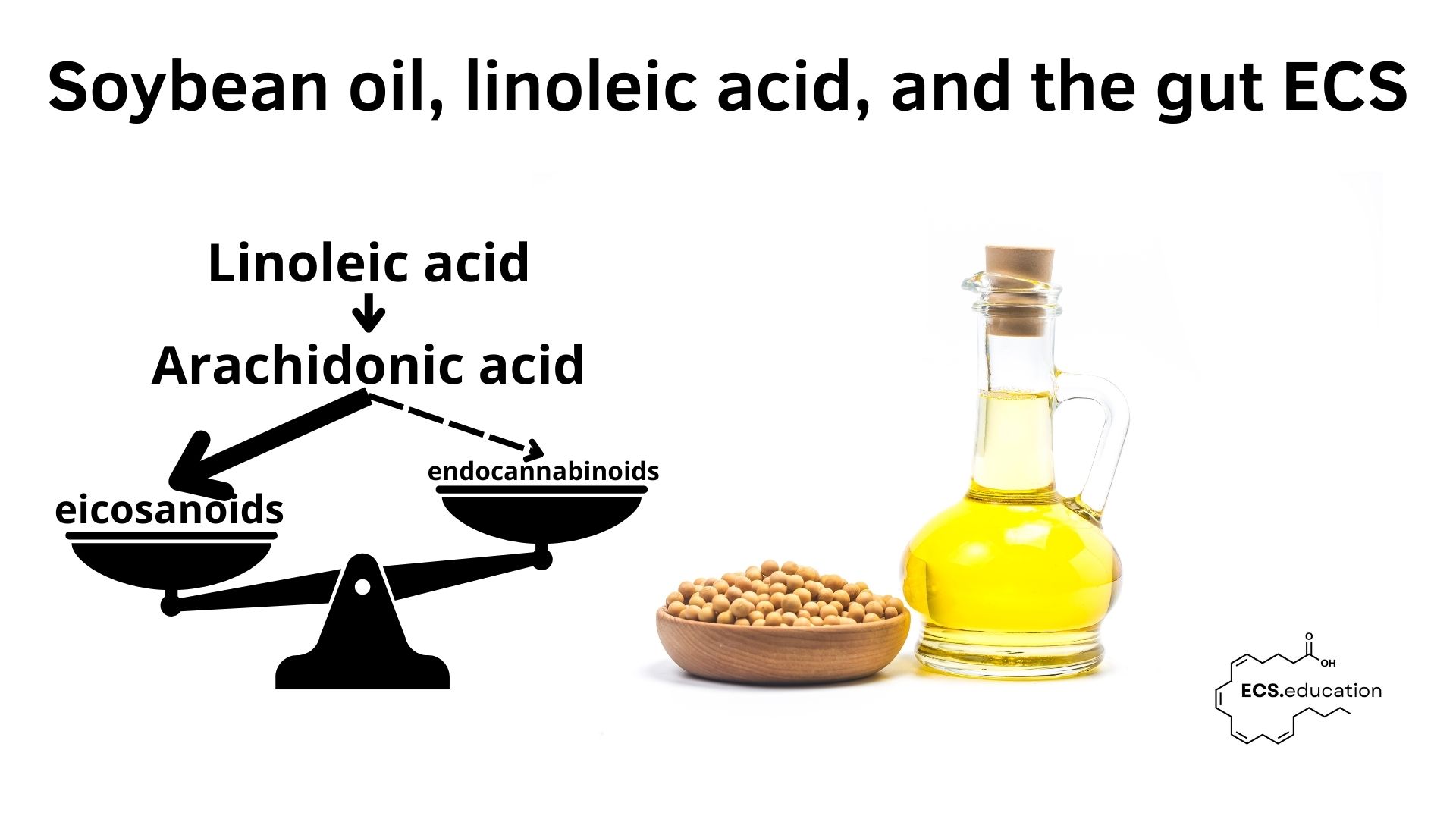
Soybean oil, linoleic acid, and the gut ECS
A recent study titled ‘Diet high in linoleic acid dysregulates the intestinal endocannabinoid system and increases susceptibility to colitis in Mice‘ shows that eating a lot of linoleic acid from soybean oil changes lipid chemistry in the gut in a way that weakens the protective endocannabinoid system and strengthens inflammatory…
Commentary
Read more
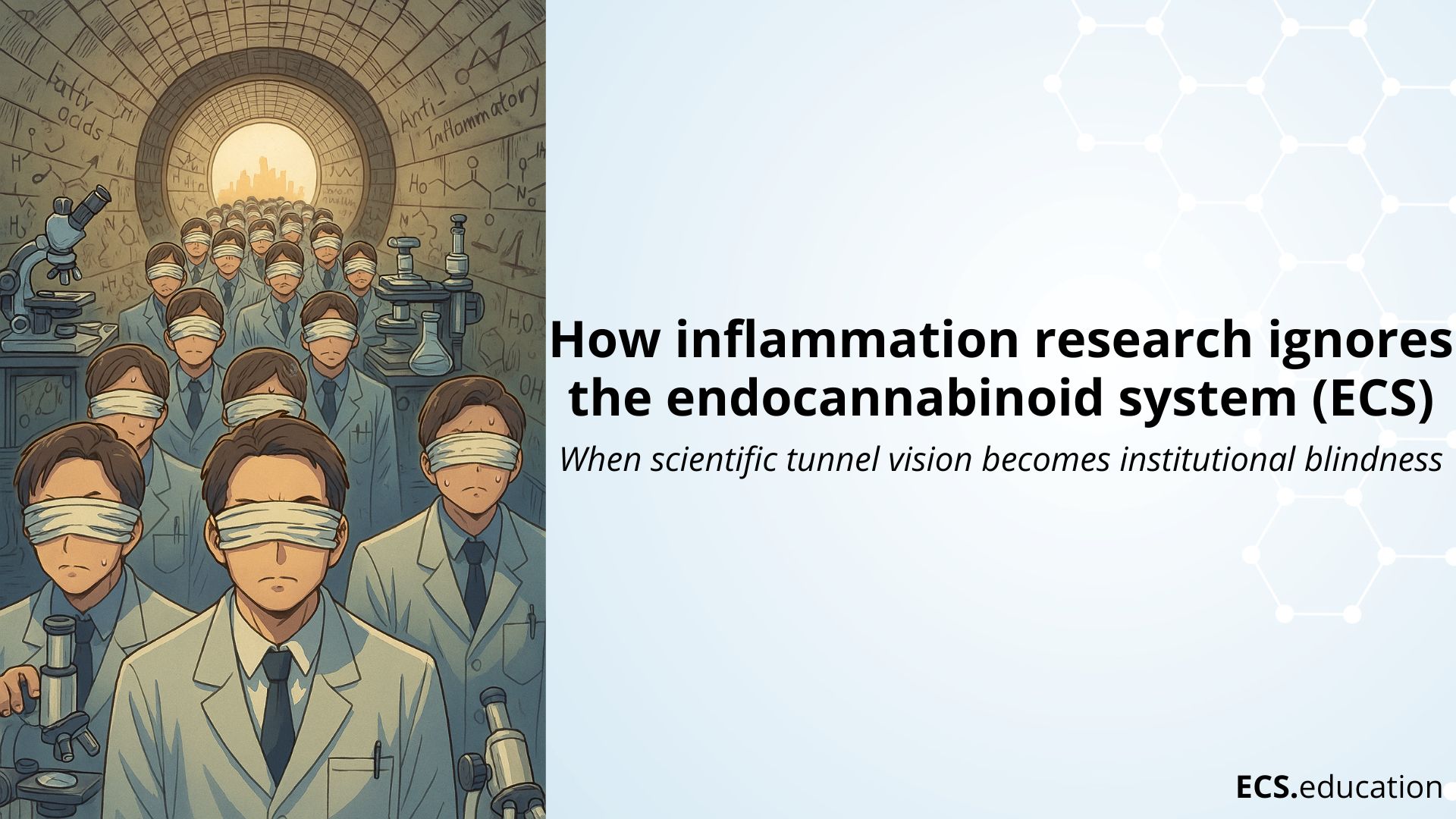
How Scientific Tunnel Vision in Inflammation Research Ignores the Endocannabinoid System (ECS)
When scientific tunnel vision becomes institutional blindness Lessons from history’s scientific blind spots Science has a troubling habit of missing the forest for the trees. For decades, gastroenterologists dismissed the idea that bacteria could cause stomach ulcers—until Barry Marshall proved Helicobacter pylori was the culprit by infecting himself. Geologists ridiculed…
Nutrition Science

Read more
The Adiposity Filter: How Maternal Body Fat Reshapes Milk PUFAs for Your Baby’s ECS
At ECS.education, we’ve previously delved into how maternal metabolism and milk composition program infant development, the profound impact of maternal diet on the endocannabinoidome and infant health, and the links between ECS dysfunction, conditions like autism, and metabolic syndrome. Today, we explore compelling new research that adds another crucial layer to this understanding:…