• About WordPress
    • WordPress.org
    • Documentation
    • Learn WordPress
    • Support
    • Feedback
  • Log In
  • Register
Skip to content
Endocannabinoid Science Education Endocannabinoid Science Education

ECS is Physiology

  • What?
  • Why?
  • How?
  • Where?
  • Contact
  • Advisory Board
  • Forums
  • Blog
  • Bio
  • ECS Explained
Endocannabinoid Science Education

ECS is Physiology

Category: MASLD

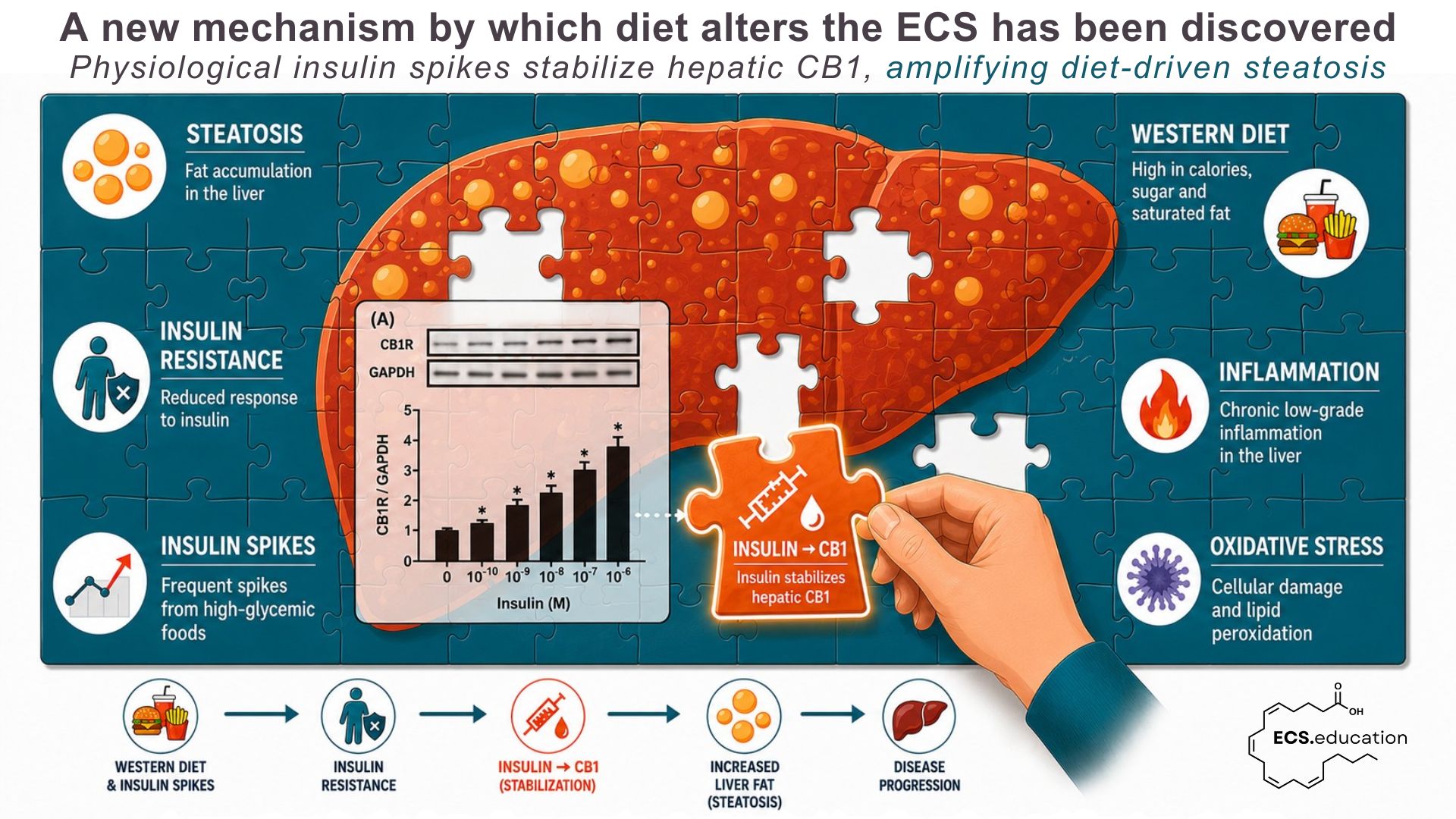
Endocannabinoid System (ECS) Jigsaw puzzle of fatty liver disease with a new insulin→CB1 piece connecting insulin spikes to hepatic CB1 and steatosis, leaving some gaps for unknown mechanisms.

How Poor Diet and Insulin Spikes Disrupt the Endocannabinoid System and Drive Fatty Liver

Posted on May 21, 2026May 21, 2026 By Stefan Broselid

Scientists have identified a new mechanism linking everyday diet to endocannabinoid system (ECS) dysfunction: normal post‑meal insulin spikes can increase CB1 receptors in the liver by about 50% by slowing their lysosomal recycling. Together with an omega‑6‑heavy fat intake, this amplifies diet‑driven steatosis and helps explain how common foods drive fatty liver disease.

Read more
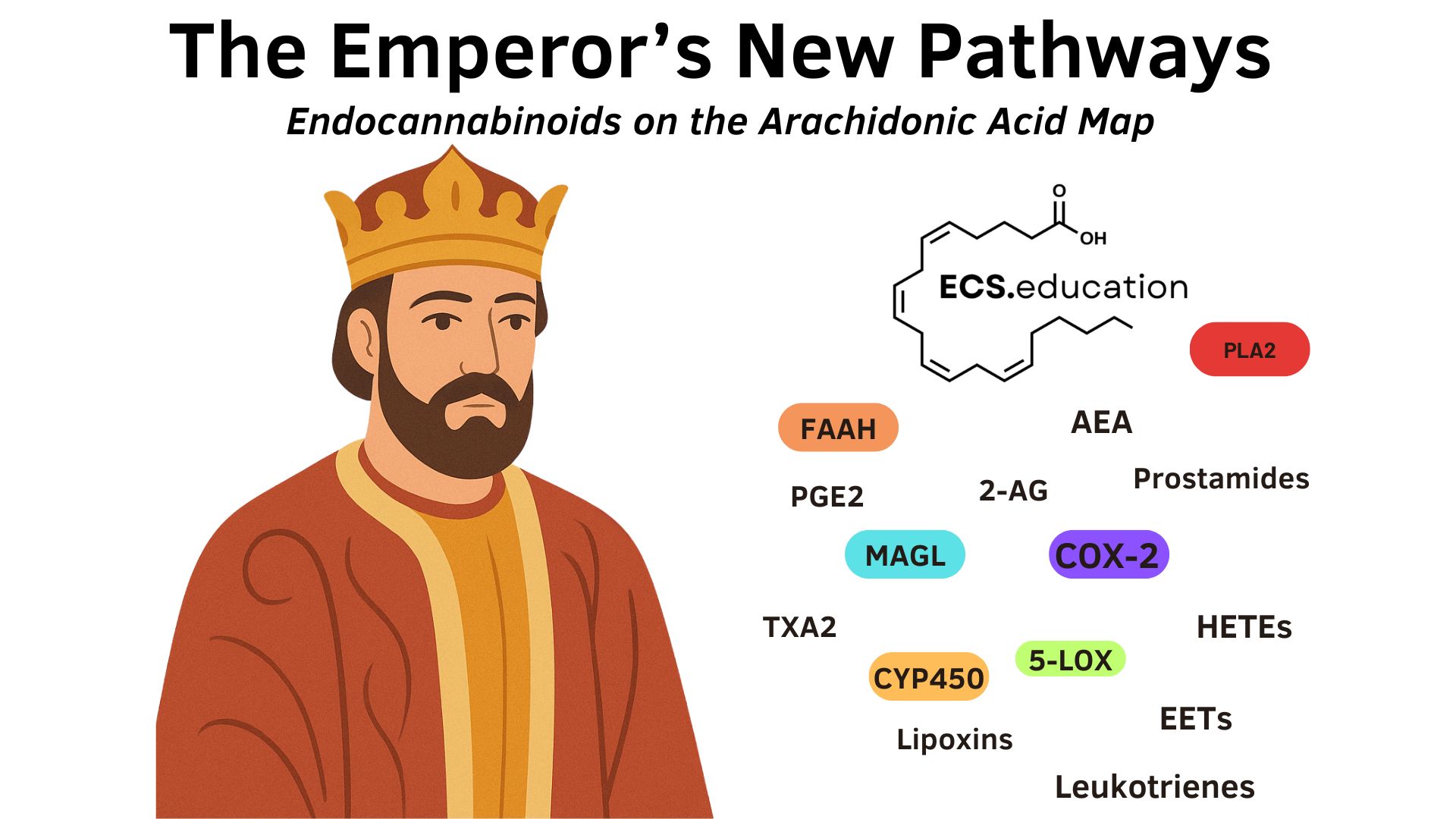
Commentary Header graphic with a crowned emperor alongside keywords linking endocannabinoids to the arachidonic acid map: AEA, 2‑AG, COX‑2, MAGL, FAAH, PLA2, 5‑LOX, CYP450, prostamides, leukotrienes, lipoxins, EETs, HETEs.”

The Emperor’s New Pathways: Endocannabinoids on the Arachidonic Acid Map

Posted on September 11, 2025September 11, 2025 By Stefan Broselid

Most NAFLD/MASLD reviews draw a neat AA trident—COX, LOX, CYP—while omitting the endocannabinoid system, even though AEA and 2‑AG are made on demand by NAPE‑PLD and DAGLα/β and rapidly hydrolyzed by FAAH and MAGL back to AA, continuously shuttling substrate between eCBs and eicosanoids in inflamed liver. A new 2025…

Read more
©2026 Endocannabinoid Science Education | WordPress Theme by SuperbThemes