
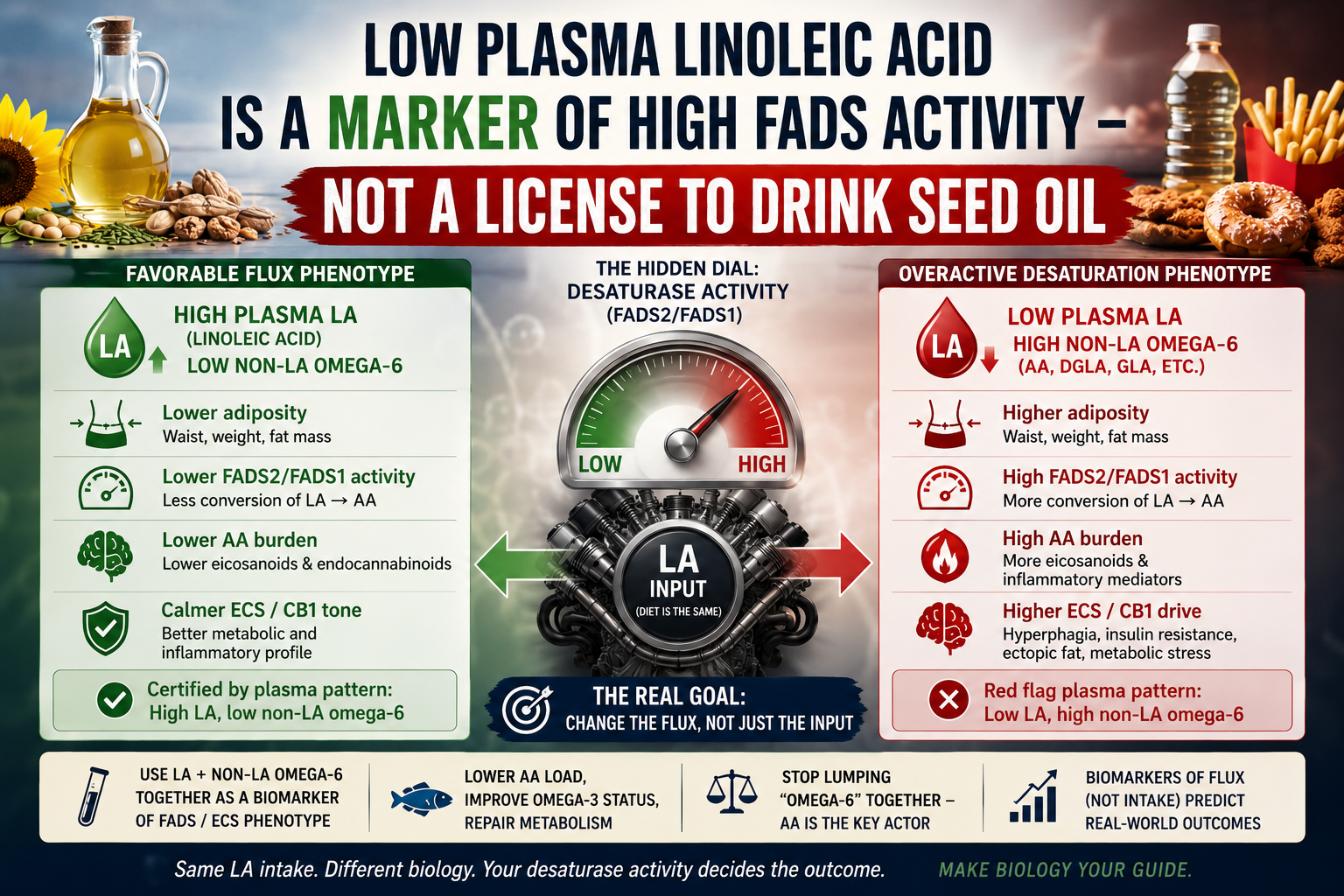
A new UK Biobank paper on omega‑6 and adiposity just landed, and if you only read the abstract, you’d think the story was simple: higher linoleic acid (LA) in plasma is “protective” against obesity and therefore we should be recommending more LA‑rich oils to everyone. Look one level deeper, and…
Category: Critical analysis
Critical analysis
Read more
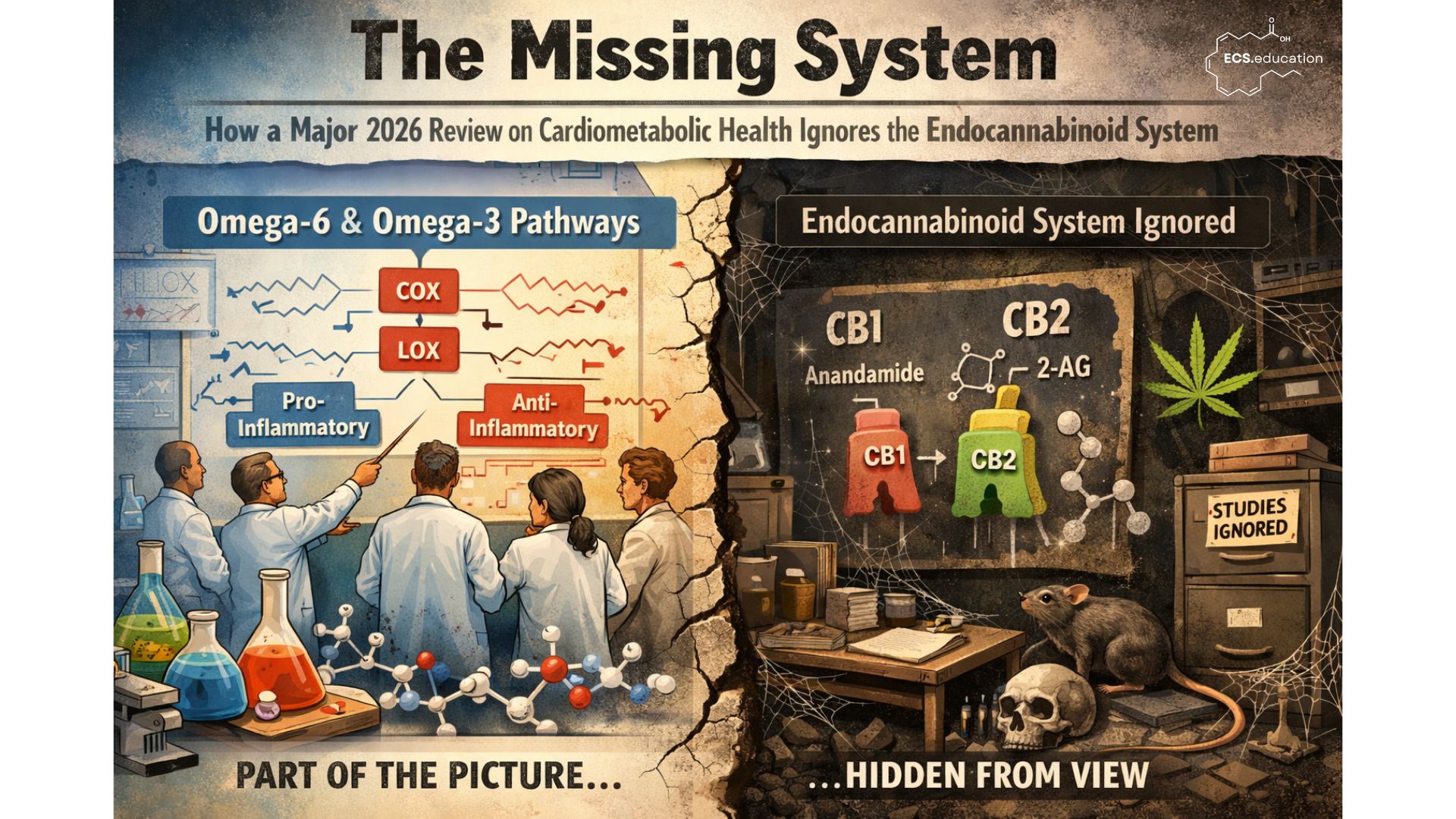
The Missing System: How a Major 2026 Review on Cardiometabolic Health Ignores the Endocannabinoid System
Last August, I wrote about a troubling pattern in inflammation research: brilliant scientists studying arachidonic acid metabolism while remaining “blissfully unaware that half the arachidonic acid story exists in a parallel research universe.” I documented how eicosanoid researchers and endocannabinoid scientists study the same substrate, same concentration ranges, same tissues—yet publish in…
Critical analysis

Read more
JAMA, Medical Cannabis and the Endocannabinoid Blind Spot
There is a saying in science: Absence of evidence is not evidence of absence. But in the case of the recent JAMA review on the therapeutic use of cannabis, I would propose a correction: Absence of mechanistic insight leads to the illusion of insufficient evidence. A new medical cannabis review published this…
Critical analysis

Read more
ECS and Exercise: The Invisible Architecture of Fitness
The body keeps secrets in its blood. On a Tuesday morning in late 2024, 491 men and women stepped onto treadmills and cycle ergometers across several research institutions. None of them knew they were about to reveal something profound about the mechanics of human fitness. They simply pushed themselves toward…
Autism Spectrum DIsorder (ASD)

Read more
Lipidomic Markers Predict Autism Through ECS Dysfunction
Autism research has long struggled with a fundamental question: why do so many disparate findings (maternal nutrition, inflammation, mitochondrial dysfunction, environmental exposures) all seem to correlate with ASD risk? A new systematic review may have inadvertently provided the unifying answer, though the authors themselves haven’t yet connected the dots. A…
Commentary
Read more
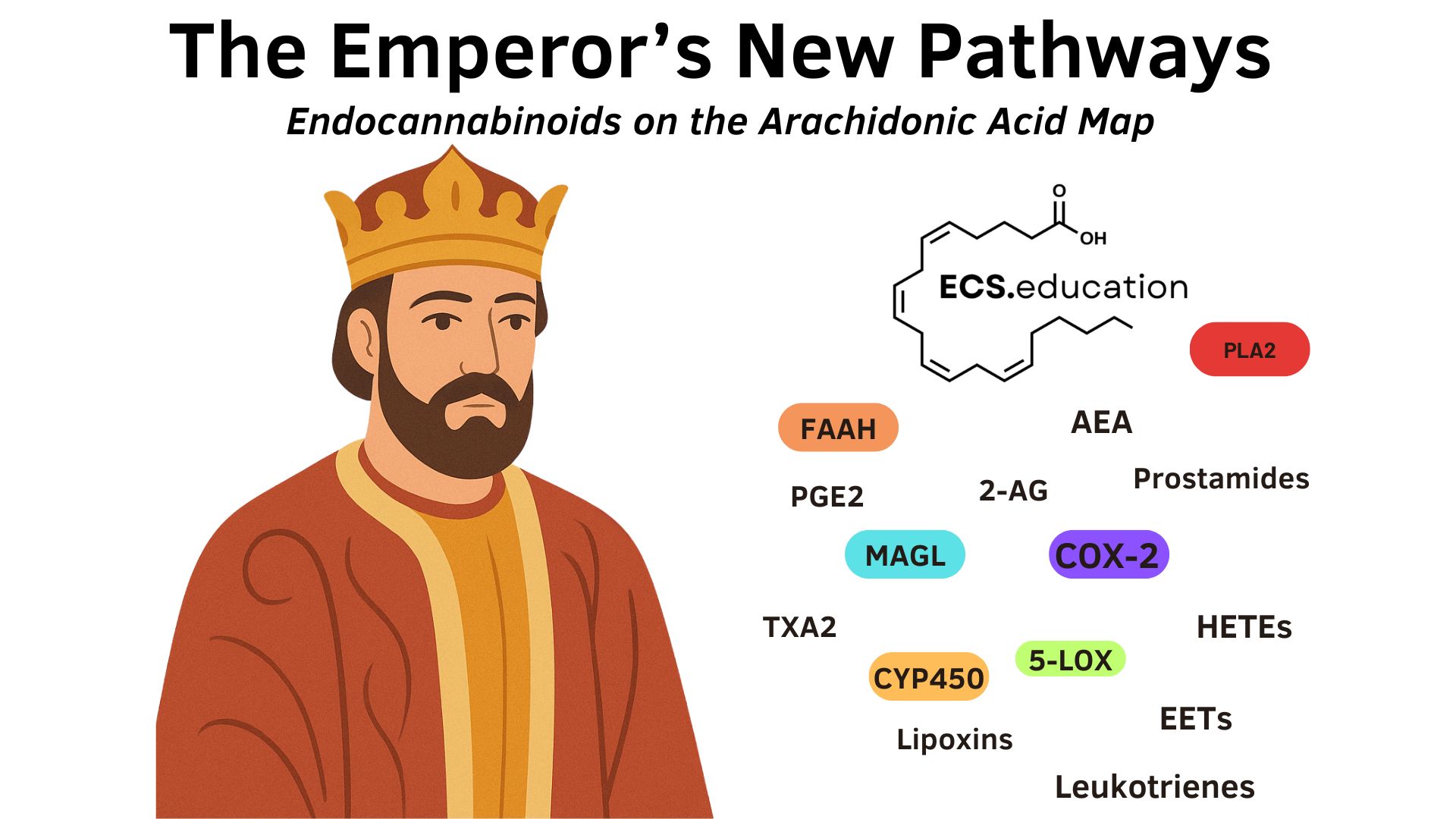
The Emperor’s New Pathways: Endocannabinoids on the Arachidonic Acid Map
Most NAFLD/MASLD reviews draw a neat AA trident—COX, LOX, CYP—while omitting the endocannabinoid system, even though AEA and 2‑AG are made on demand by NAPE‑PLD and DAGLα/β and rapidly hydrolyzed by FAAH and MAGL back to AA, continuously shuttling substrate between eCBs and eicosanoids in inflamed liver. A new 2025…
Critical analysis
Read more
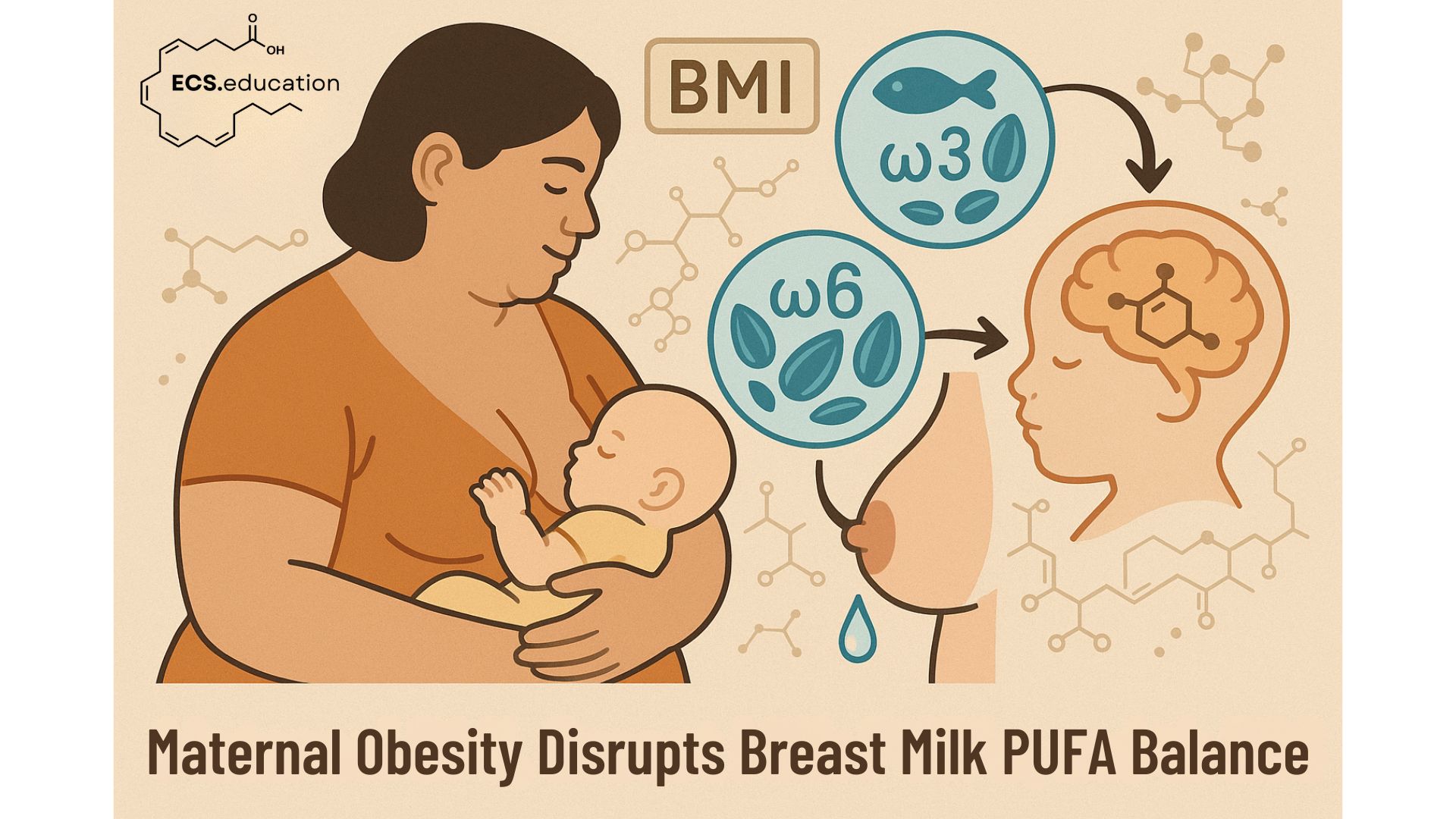
Maternal Obesity Disrupts Breast Milk PUFA Balance: New Insights into ECS Programming for Infants
Let’s dive right in. In my earlier posts on ECS.education, we’ve talked about how maternal adiposity shapes breast milk’s endocannabinoid system (ECS) and influences infant health. The May 23 piece on ‘The Adiposity Filter: How Maternal Body Fat Reshapes Milk PUFAs for Your Baby’s ECS‘ highlighted shifts in endocannabinoid profiles…
Commentary

Read more
Beyond the Buzz: Cannabis Heart Risks vs. Diet-Driven ECS Overload
Introduction: Beyond the Buzz – A Flawed Focus on Cannabis Recent headlines have lit up with warnings about cannabis and heart health, fueled by a systematic review showing links to increased risks of strokes, heart attacks, and cardiovascular death. It’s easy to get caught up in the alarm. After all, who doesn’t want to protect their ticker? But here’s where our reasoning goes off track:…
Critical analysis
Read more
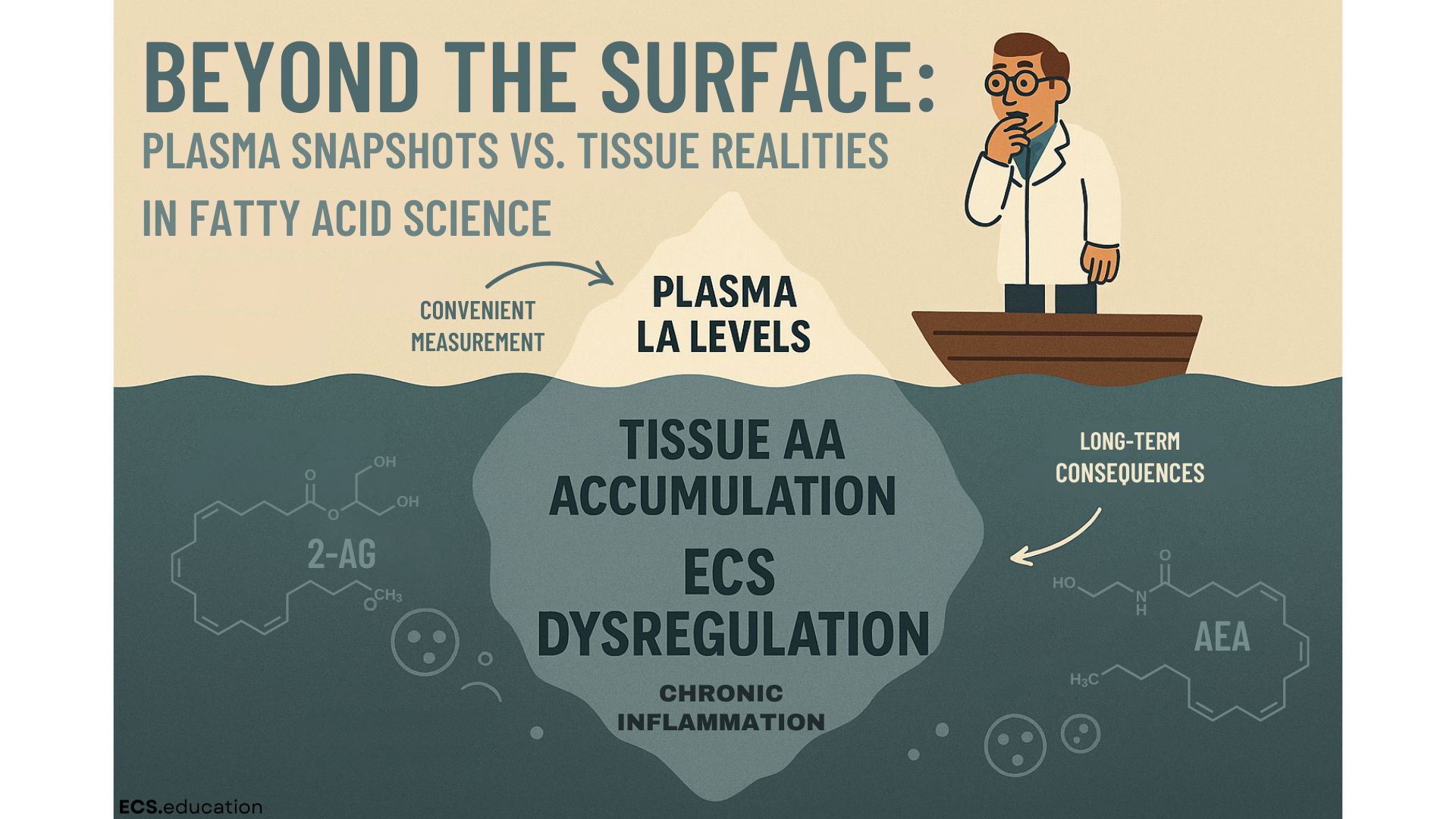
Omega-6, Mortality, and Your ECS: Unpacking the Latest UK Biobank Bombshell
A major UK Biobank study found higher plasma linoleic acid (LA) linked to lower mortality, seemingly contradicting concerns about high dietary omega-6 driving ECS dysfunction. This post unpacks the findings, distinguishing between plasma snapshots and tissue arachidonic acid (AA) realities, and explains why the omega-6/omega-3 balance and ECS perspective remain crucial for understanding metabolic health.
Critical analysis
Read more
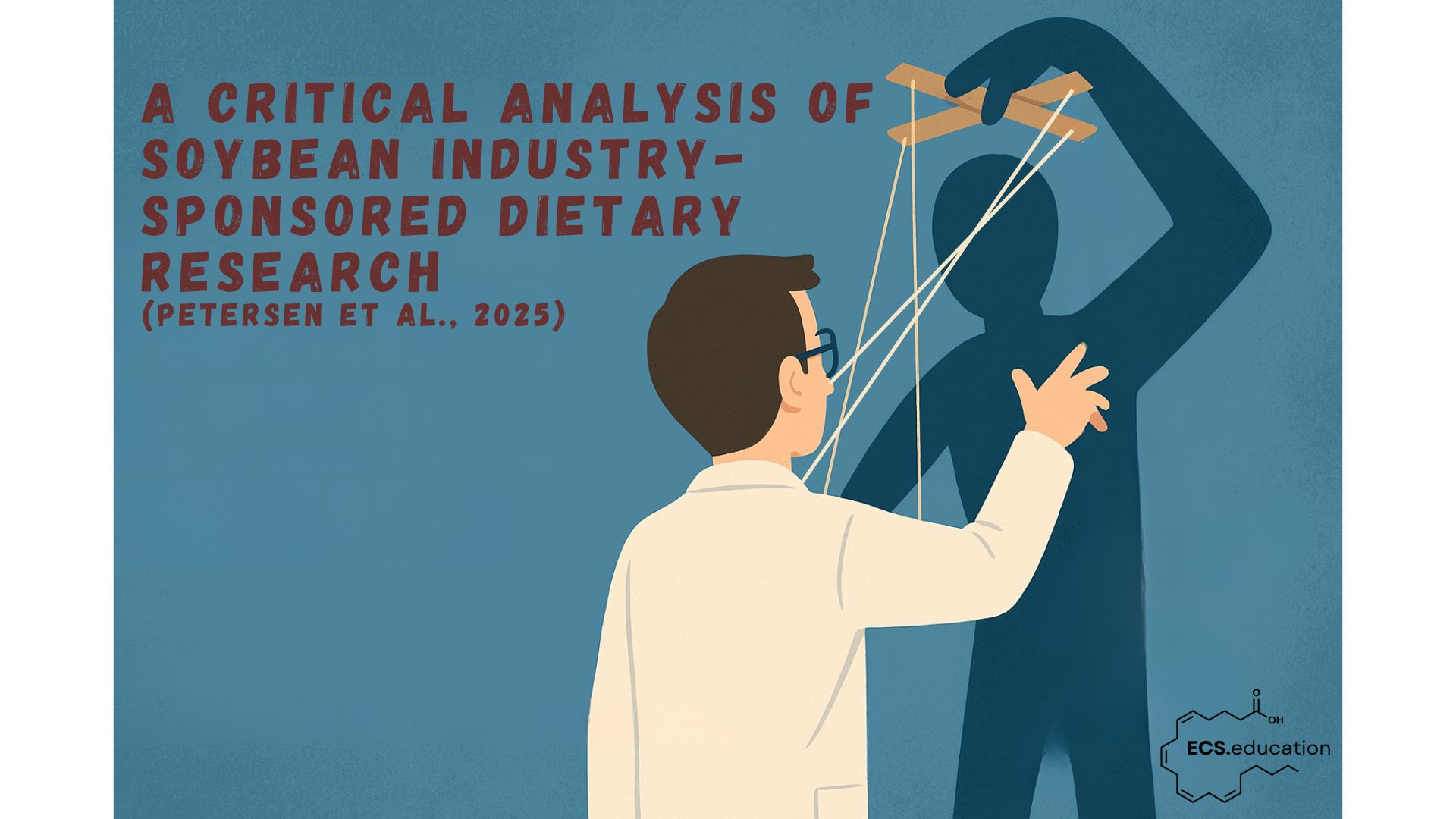
The Invisible Puppeteer in Seed Oil Research
Let’s cut through the noise: Petersen et al.’s recent industry-funded narrative review, published in Nutrition Today, employs selective framing—shifting focus away from the central regulator of metabolism, the endocannabinoid system (ECS). This 600-million-year-old conductor of hunger, fat storage, and inflammation is fueled by linoleic acid (LA), yet the manuscript acts…