
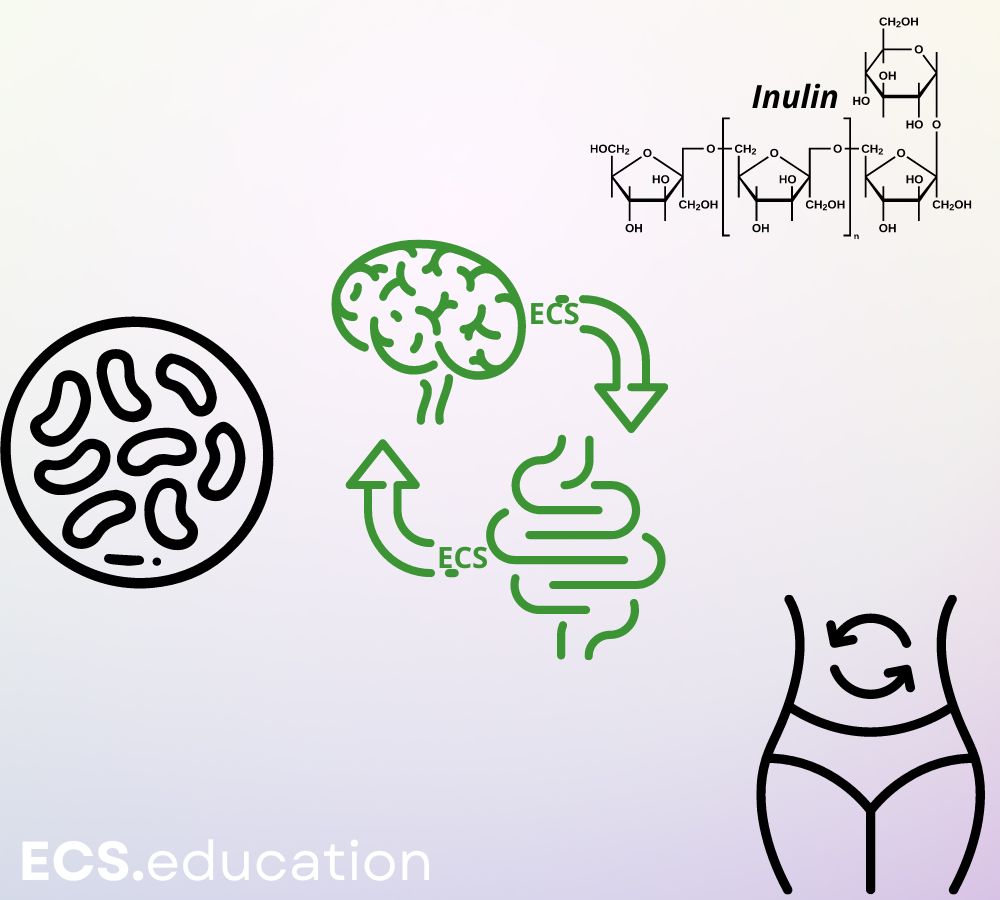
In recent years, our understanding of the complex interplay between diet, gut health, and metabolic regulation has expanded dramatically. At the forefront of this research is the emerging role of prebiotics, particularly inulin, in modulating the endocannabinoid system (ECS) and its impact on metabolic health. This blog post explores the latest findings on how prebiotics influence the ECS, liver health, obesity, and inflammation, offering new insights into potential therapeutic approaches for metabolic disorders.
The Endocannabinoid System: A Key Player in Metabolic Regulation
The ECS, a complex network of receptors, endogenous ligands, and enzymes, plays a crucial role in regulating energy balance, appetite, and metabolism [1].
This system, often overlooked in mainstream medicine, is now recognized as a central player in maintaining homeostasis throughout the body. The cannabinoid receptor type 1 (CB1) and type 2 (CB2) are the primary receptors of the ECS, with CB1 receptors widely distributed in the brain and peripheral tissues involved in metabolism [2].
Inulin: A Prebiotic Powerhouse
Inulin, a type of dietary fiber found in various plants, has gained attention for its potential to influence the ECS and metabolic health. Recent studies have shed light on the mechanisms through which inulin may exert its beneficial effects:
Liver Health and Steatosis Prevention
An illuminating study by Alptekin et al. (2022) revealed that inulin might prevent steatosis by suppressing cannabinoid receptor-1 (CB1) and patatin-like phospholipase-3 (PNPLA3) expression in the liver [3]. This finding is particularly significant given the rising prevalence of non-alcoholic fatty liver disease (NAFLD) in Western populations. By modulating CB1 expression, inulin may help regulate lipid metabolism and reduce fat accumulation in the liver, offering a potential dietary intervention for NAFLD prevention and treatment.
Obesity Prevention and Brain Function
Building on their previous work, Alptekin et al. (2024) further explored inulin’s effects on high-fat diet-induced obesity, focusing on the ECS in the prefrontal cortex [4]. Their findings suggest that inulin may prevent obesity by suppressing the endocannabinoid system in this crucial brain region. This research highlights the intricate connection between gut health, the ECS, and brain function in regulating energy balance and appetite.
Synergistic Effects of Prebiotics and Probiotics
While inulin alone shows promise, combining prebiotics with probiotics may offer even greater benefits. Liu et al. (2023) conducted a clinical trial investigating the impact of a prebiotic-probiotic combination on gut permeability, endocannabinoid receptors, and inflammatory biomarkers in patients with coronary artery disease [5]. Their results demonstrated favorable effects on these parameters, suggesting a potential role for this combination in managing cardiovascular health through modulation of the ECS and inflammatory pathways.

Figure 1 presents compelling evidence from Liu et al. (2023) that demonstrates the synergistic effects of probiotic and prebiotic (inulin) interventions on the endocannabinoid system and gut microbiota in patients with coronary artery disease (CAD). This figure provides crucial insights into the mechanisms by which prebiotics modulate the ECS through the gut-brain axis.
Panel A illustrates changes in CB1 and CB2 receptor expression levels across the four treatment groups. Notably, the synbiotic (Probiotic+Inulin) group showed a significant increase in CB2 receptor expression (p=0.003) and an on-the-verge to significant decrease in CB1 expression (p=0.055). If the study had been powered slightly higher, this association would likely have become statistically significant. This modulation of the endocannabinoid system aligns with previous findings by Cani et al. (2016), who reported that gut microbiota can influence endocannabinoid signaling [6].
Panel B demonstrates changes in the Firmicutes to Bacteroidetes (F/B) ratio before and after intervention. The synbiotic group exhibited the most dramatic reduction in F/B ratio, from 5.07 to 1.28 (74.8% decrease). The probiotic and inulin groups also showed substantial decreases of 43.7% and 36.3%, respectively, while the placebo group had a minimal change of 8.4%. These findings are consistent with those of Ley et al. (2006), who first reported the association between F/B ratio and metabolic health (7).
Panel C presents a heatmap of correlations between physiological variables and CB1/CB2 receptor expression. Notably, CB1 expression showed a positive correlation with F/B ratio (r=0.41), while CB2 expression negatively correlated with LPS levels (r=-0.10). These correlations suggest a complex interplay between gut microbiota composition, endocannabinoid signaling, and markers of metabolic health, as previously proposed by Muccioli et al. (2010) [8].
Collectively, the data presented in Figure 1 provide strong evidence for the gut-brain axis as a key mediator in prebiotic-induced ECS modulation. The synergistic effects of probiotics and prebiotics on both CB1 and CB2 receptor expression, coupled with significant changes in gut microbiota composition, highlight the potential of this approach in managing metabolic disorders. These findings support the hypothesis that prebiotics, particularly when combined with probiotics, can effectively modulate the ECS through alterations in the gut microbiome, thereby influencing metabolic health outcomes.
Implications for Metabolic Health
The emerging research on prebiotics and the ECS has significant implications for our approach to metabolic health:
- Targeted Dietary Interventions: Understanding the specific effects of prebiotics like inulin on the ECS allows for more targeted dietary recommendations in managing obesity, NAFLD, and related metabolic disorders.
- Gut-Brain Axis Modulation: The ability of prebiotics to influence the ECS in both the gut and brain underscores the importance of the gut-brain axis in metabolic regulation. This opens up new ways for addressing obesity and metabolic syndrome through dietary interventions that target this axis.
- Inflammation Reduction: The anti-inflammatory effects observed with prebiotic-probiotic combinations suggest a potential role in managing chronic low-grade inflammation associated with metabolic disorders and cardiovascular disease.
- Personalized Nutrition: As we uncover the complex interactions between prebiotics, the ECS, and individual metabolic profiles, we move closer to personalized nutritional strategies for optimal metabolic health.
- Gut-Brain-ECS Axis: The strong correlations observed between gut microbiota composition, CB1/CB2 receptor expression, and metabolic parameters (as shown in Figure 1) emphasize the importance of the gut-brain-ECS axis in metabolic regulation. This suggests that targeting this axis through prebiotic and probiotic interventions could be a powerful approach to managing metabolic disorders.
Connecting the Dots: Prebiotics, ECS, and GLP-1 Signaling
Interestingly, the effects of prebiotics on the ECS may intersect with another hot topic in metabolic health: GLP-1 receptor agonists. As discussed in our recent blog post on GLP-1 and the ECS, there’s growing evidence of a synergistic relationship between GLP-1 signaling and the endocannabinoid system in regulating appetite and metabolism [9].
Prebiotics like inulin have been shown to increase GLP-1 secretion, potentially offering a natural way to enhance GLP-1 signaling (10). This raises intriguing questions about the potential for combining prebiotic interventions with GLP-1 receptor agonists or using prebiotics as a complementary approach to support weight management and metabolic health.
Future Research Directions
While the current research is promising, several key areas warrant further investigation:
- Long-term Effects: Studies examining the long-term impacts of prebiotic supplementation on the ECS and metabolic health are needed to establish optimal intervention strategies.
- Dose-Response Relationships: Determining the ideal dosage of prebiotics for ECS modulation and metabolic benefits is crucial for developing effective dietary recommendations.
- Interaction with Other Dietary Components: Investigating how prebiotics interact with other dietary factors, such as omega-3 fatty acids, in modulating the ECS could provide insights into optimal dietary patterns for metabolic health.
- Mechanisms of Action: Further elucidation of the precise mechanisms through which prebiotics influence the ECS, including potential epigenetic effects, is necessary to fully understand their therapeutic potential.
- Clinical Trials: Large-scale, randomized controlled trials in diverse populations are needed to confirm the efficacy of prebiotic interventions for metabolic health outcomes.
Conclusion
The emerging research on prebiotics and the endocannabinoid system represents a new frontier in our understanding of metabolic health. By modulating the ECS through dietary interventions, we may be able to develop more effective strategies for preventing and managing obesity, NAFLD, and related metabolic disorders.
As we continue to unravel the complex relationships between diet, the gut microbiome, and the ECS, it becomes increasingly clear that a holistic approach to metabolic health is necessary. Integrating prebiotic supplementation with other dietary and lifestyle interventions may offer a powerful tool in our fight against the global epidemic of metabolic disorders.
The potential synergies between prebiotic interventions, ECS modulation, and emerging therapies like GLP-1 receptor agonists highlight the importance of continued research in this field. As we move forward, the development of personalized nutritional strategies that leverage our understanding of the ECS and gut-brain axis may revolutionize our approach to metabolic health, offering new hope for millions affected by obesity and related disorders worldwide.
The findings presented in Figure 1 provide compelling evidence for the role of the gut-brain-ECS axis in mediating the metabolic benefits of prebiotic and probiotic interventions. The synergistic effects observed with combined prebiotic and probiotic supplementation on CB1 and CB2 receptor expression, gut microbiota composition, and their associations with metabolic parameters highlight the potential of this approach in developing novel therapeutic strategies for metabolic disorders. As we continue to unravel the complex interactions within this axis, we move closer to harnessing the full potential of the endocannabinoid system in promoting metabolic health.
References
- Di Marzo V, Silvestri C. The Endocannabinoid System in Energy Homeostasis and the Etiopathology of Metabolic Disorders. Cell Metab. 2013;17(4):475-490. doi:10.1016/j.cmet.2013.03.001
- Murphy T, Le Foll B. Targeting the Endocannabinoid CB1 Receptor to Treat Body Weight Disorders: A Preclinical and Clinical Review of the Therapeutic Potential of Past and Present CB1 Drugs. Biomolecules. 2020;10(6):855. doi:10.3390/biom10060855
- Alptekin İM, Çakıroğlu FP, Kiremitci S, Reçber T, Nemutlu E. Inulin may prevent steatosis by suppressing cannabinoid receptor-1 and patatin-like phospholipase-3 expression in liver. Nutrition. 2022;103-104:111742. doi:10.1016/j.nut.2022.111742
- Alptekin İM, Çakıroğlu FP, Reçber T, Nemutlu E. Inulin may prevent the high-fat diet induced-obesity via suppressing endocannabinoid system in the prefrontal cortex in Wistar rats. Int J Food Sci Nutr. Published online October 3, 2024. doi:10.1080/09637486.2024.2408545
- Liu M, Tandorost A, Moludi J, Dey P. Prebiotics Plus Probiotics May Favorably Impact on Gut Permeability, Endocannabinoid Receptors, and Inflammatory Biomarkers in Patients with Coronary Artery Diseases: A Clinical Trial. Food Sci Nutr. 2023;12(2):1207-1217. doi:10.1002/fsn3.3835
- Cani PD, Plovier H, Van Hul M, et al. Endocannabinoids — at the crossroads between the gut microbiota and host metabolism. Nat Rev Endocrinol. 2016;12(3):133-143. doi:10.1038/nrendo.2015.211
- Ley RE, Turnbaugh PJ, Klein S, Gordon JI. Human gut microbes associated with obesity. Nature. 2006;444(7122):1022-1023. doi:10.1038/4441022a
- Muccioli GG, Naslain D, Bäckhed F, et al. The endocannabinoid system links gut microbiota to adipogenesis. Mol Syst Biol. 2010;6(1):392. doi:10.1038/msb.2010.46
- ECS.education. GLP-1 Receptor Agonists and the ECS: A Promising Alliance in the Fight Against Obesity? Published August 28, 2024. https://ecs.education/2024/08/28/glp1-ecs-alliance-obesity-treatment/
- Cani PD, Lecourt E, Dewulf EM, et al. Gut microbiota fermentation of prebiotics increases satietogenic and incretin gut peptide production with consequences for appetite sensation and glucose response after a meal. Am J Clin Nutr. 2009;90(5):1236-1243. doi:10.3945/ajcn.2009.28095