
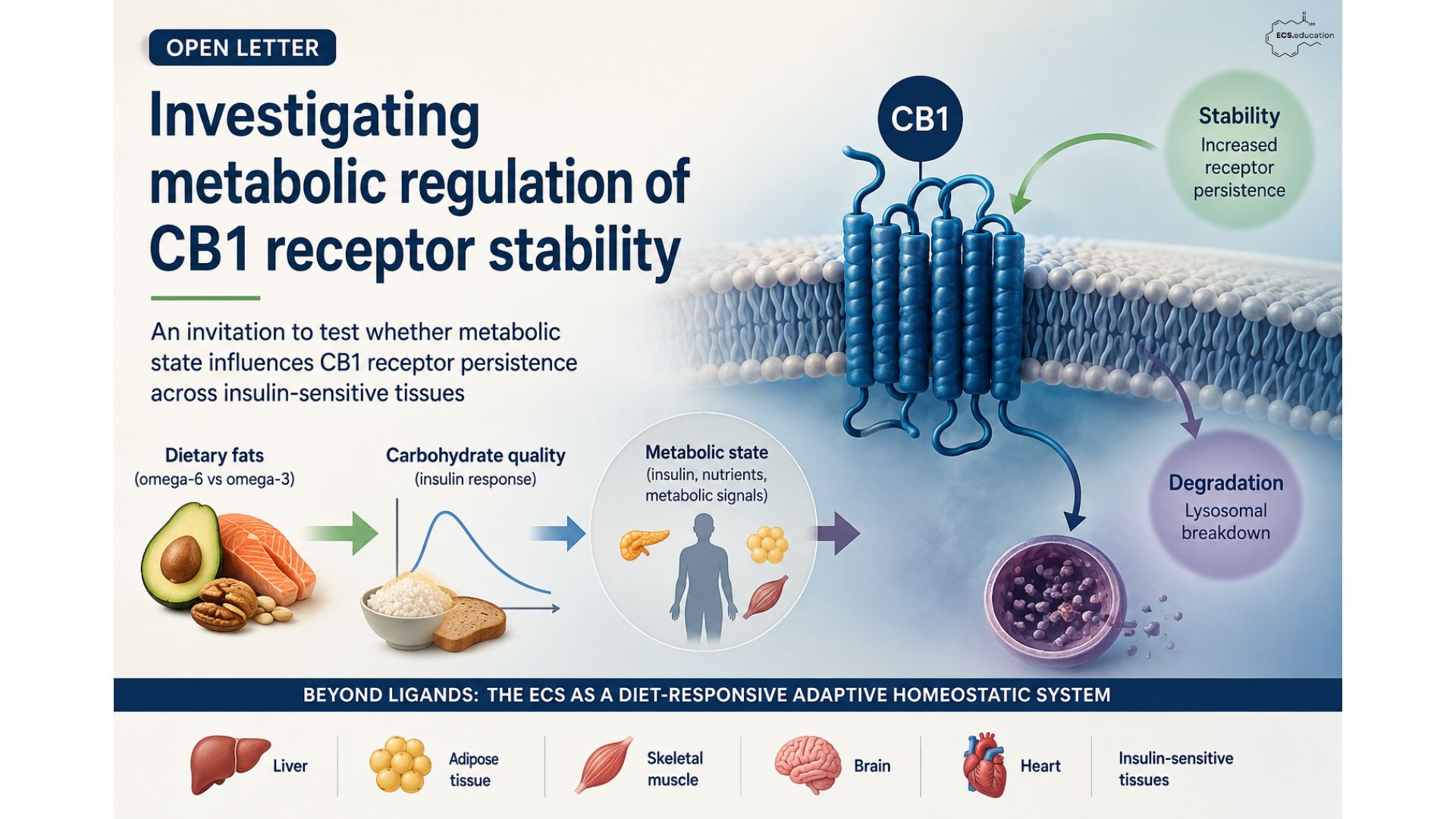
An open letter inviting researchers to investigate whether metabolic state influences CB1 receptor stability, trafficking and degradation across insulin-sensitive tissues, and whether this represents a broader principle of endocannabinoid system regulation.
Tag: Metabolic health
Endocannabinoid System (ECS)
Read more
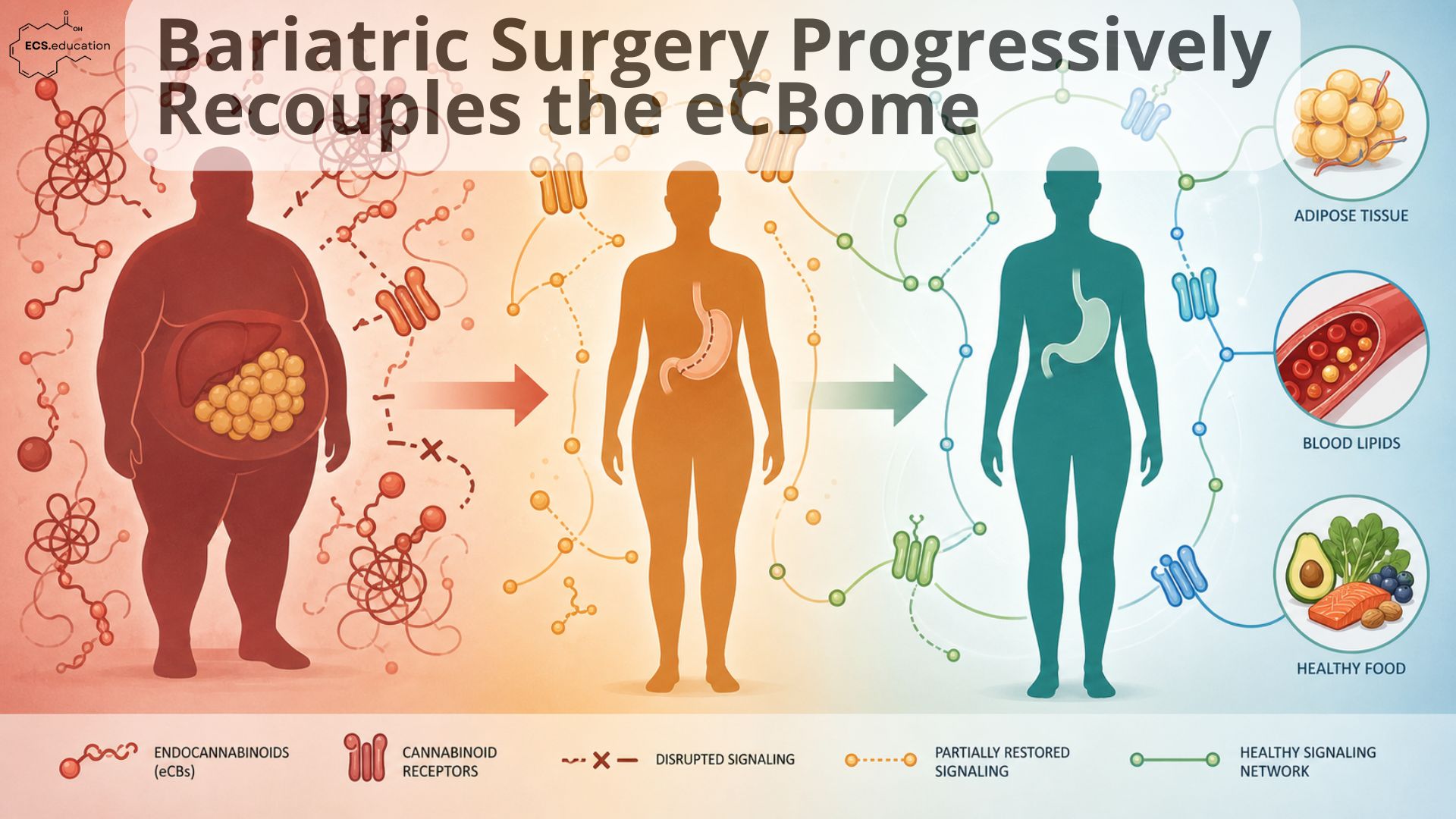
Bariatric Surgery Progressively Recouples the eCBome
How Bariatric Surgery Recouples the Endocannabinoidome For years, obesity has been framed as a simple problem of “too many calories in, not enough out.” The endocannabinoidome (eCBome) tells a different story. In severe obesity, the lipid‑signaling network that should help regulate appetite, energy balance and metabolic health is present, but…
Critical analysis
Read more
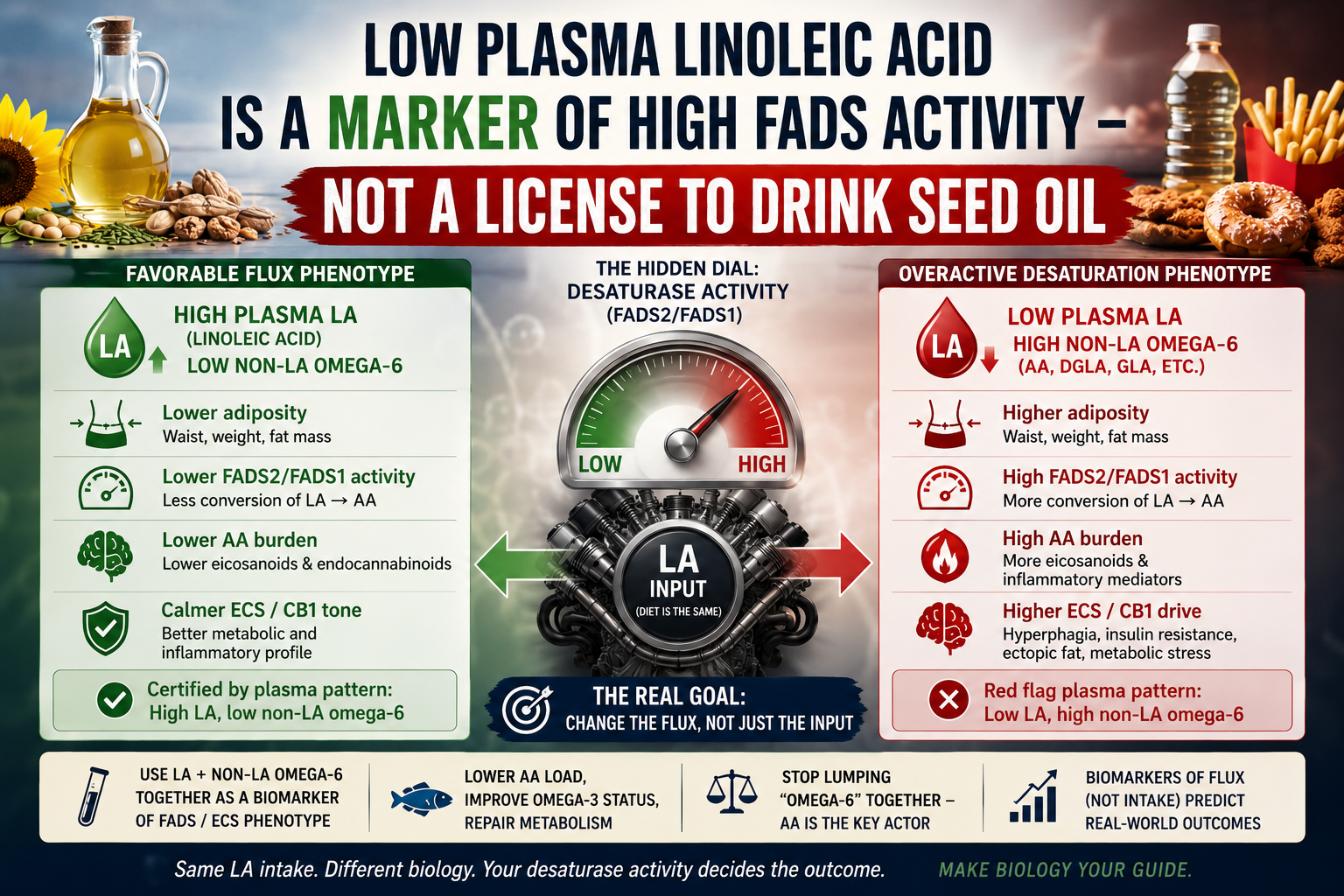
Low plasma linoleic acid is a marker of high FADS activity – not a license to drink seed oil
A new UK Biobank paper on omega‑6 and adiposity just landed, and if you only read the abstract, you’d think the story was simple: higher linoleic acid (LA) in plasma is “protective” against obesity and therefore we should be recommending more LA‑rich oils to everyone. Look one level deeper, and…
Endocannabinoid System (ECS)

Read more
The New US Dietary Guidelines: Eat to Support Your ECS
This article explains how the endocannabinoid system is shaped by diet, especially omega‑6 and omega‑3 fats. The 2025–2030 US Dietary Guidelines process is quietly doing something profound. On the surface, it might look like another technical update about fat intake, unsaturated oils, and seafood recommendations. But underneath that familiar language sits…
Endocannabinoid System (ECS)
Read more
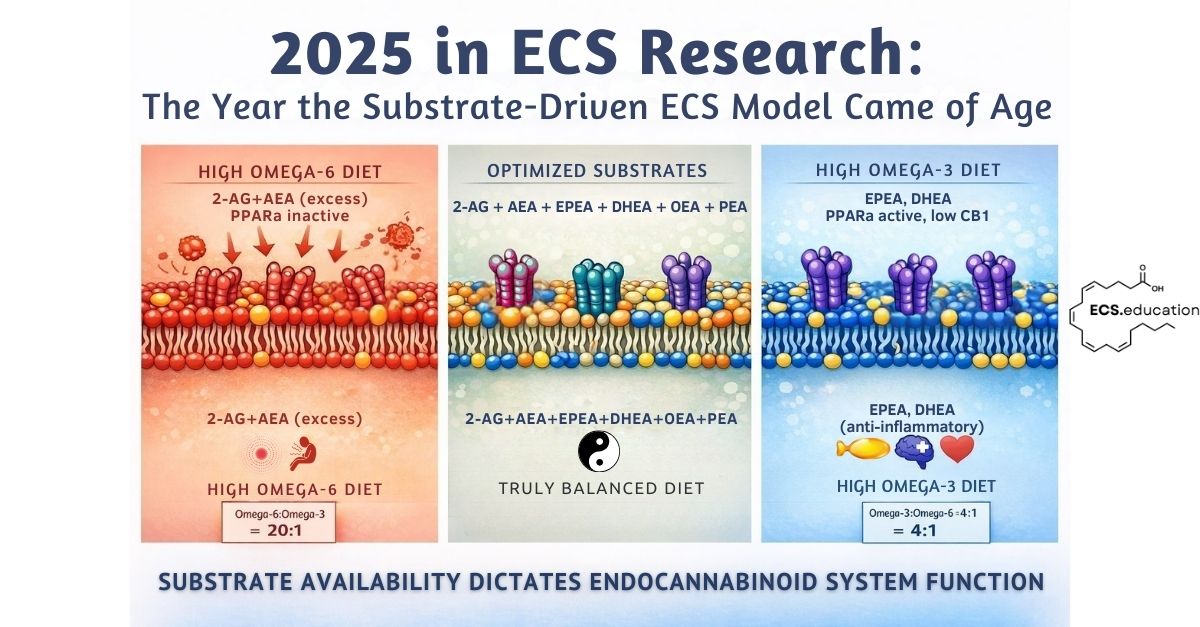
2025 in ECS Research: The Year the Substrate-Driven ECS Model Came of Age
Endocannabinoid system substrate—specifically membrane fatty acid composition—is the primary determinant of CB1 receptor function, not genetics or receptor density. For years, I’ve been making the case that endocannabinoid system function is not primarily about receptor density or genetic variants, it’s about substrate availability. The composition of fatty acids in cell…
Critical analysis

Read more
ECS and Exercise: The Invisible Architecture of Fitness
The body keeps secrets in its blood. On a Tuesday morning in late 2024, 491 men and women stepped onto treadmills and cycle ergometers across several research institutions. None of them knew they were about to reveal something profound about the mechanics of human fitness. They simply pushed themselves toward…
Endocannabinoid System (ECS)

Read more
How Diet and Exercise Modulate the Endocannabinoid System
New Evidence for the Substrate-Driven Model I came across a fascinating recent study this week in Nutritional Neuroscience that really validates something I’ve been thinking about for a while. Lima and colleagues just published research showing how diet and exercise reshape the endocannabinoid system in the brain. It all fits beautifully with what I call the substrate-driven model of ECS function. Let me walk you through what they found and why it matters. The Study: Diet, Exercise & Brain ECS The team took young rats and divided them into groups. Some got standard lab chow, others got a “palatable diet” (think: high in omega-6 fats and sugar, like a Western diet). Some rats didtreadmill training for eight weeks, others didn’t. Then they looked at CB1 receptors and NAPE-PLD enzyme levels in three key brain areas: • Hypothalamus – your energy regulation center • Frontal cortex – handles reward and decision-making…
Endocannabinoid System (ECS)

Read more
The Biochemical Plateau: Rethinking Linoleic Acid and Heart Health
The Linoleic Acid Paradox: Protection or Peril? For decades, linoleic acid has enjoyed a privileged place in nutritional policy. It is the cornerstone of “heart-healthy” messaging, the molecular mascot of seed oils, and the quiet passenger in countless processed foods. But beneath this reputation lies a paradox: the very molecule…
Commentary
Read more
How Scientific Tunnel Vision in Inflammation Research Ignores the Endocannabinoid System (ECS)
When scientific tunnel vision becomes institutional blindness Lessons from history’s scientific blind spots Science has a troubling habit of missing the forest for the trees. For decades, gastroenterologists dismissed the idea that bacteria could cause stomach ulcers—until Barry Marshall proved Helicobacter pylori was the culprit by infecting himself. Geologists ridiculed…
Endocannabinoid System (ECS)

Read more
Obesity Rewires Your Endocannabinoid System (ECS): How Fat, Liver, Heart & Brain Are Transformed
Obesity is more than excess fat—it’s a disorder of endocannabinoid system (ECS) dysfunction. Explore how obesity rewires CB1 signaling in fat, liver, heart, and brain, driving chronic disease.