
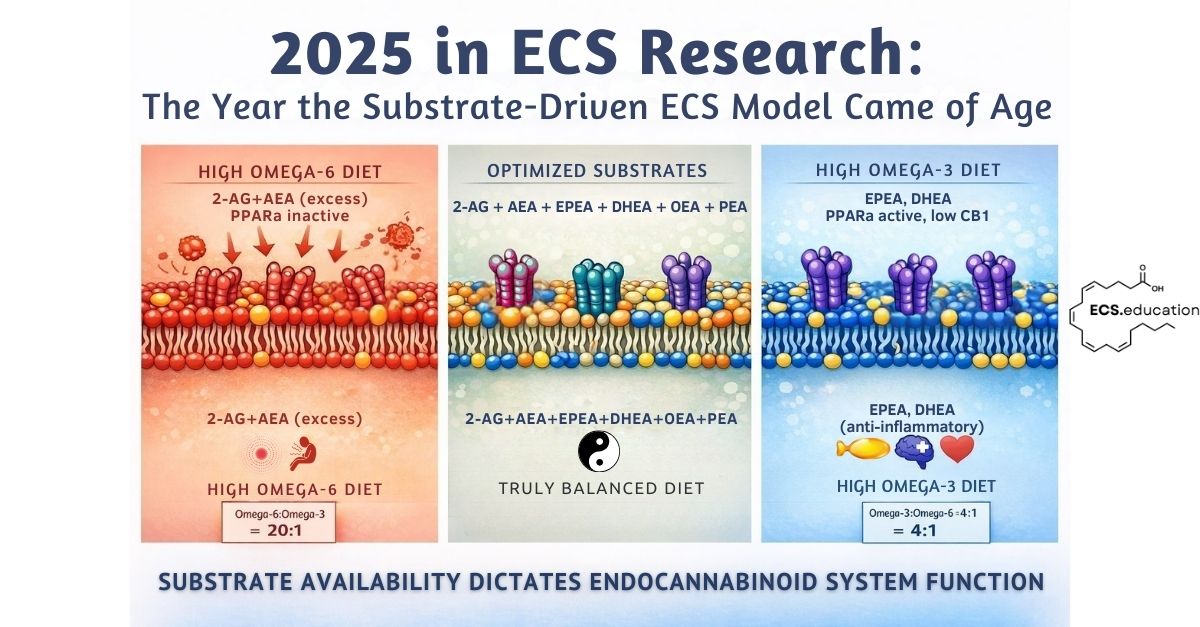
Endocannabinoid system substrate—specifically membrane fatty acid composition—is the primary determinant of CB1 receptor function, not genetics or receptor density. For years, I’ve been making the case that endocannabinoid system function is not primarily about receptor density or genetic variants, it’s about substrate availability. The composition of fatty acids in cell…
Tag: Inflammation
Endocannabinoid System (ECS)

Read more
Beyond the ECS: Why you absolutely need a balanced diet
Your body produces its own cannabis-like molecules. Right now, as you read this, your cells are manufacturing compounds that interact with the same receptors that THC targets. But here’s what most people don’t realize: this system extends far beyond what we traditionally call the “endocannabinoid system”, and the food on…
Commentary
Read more
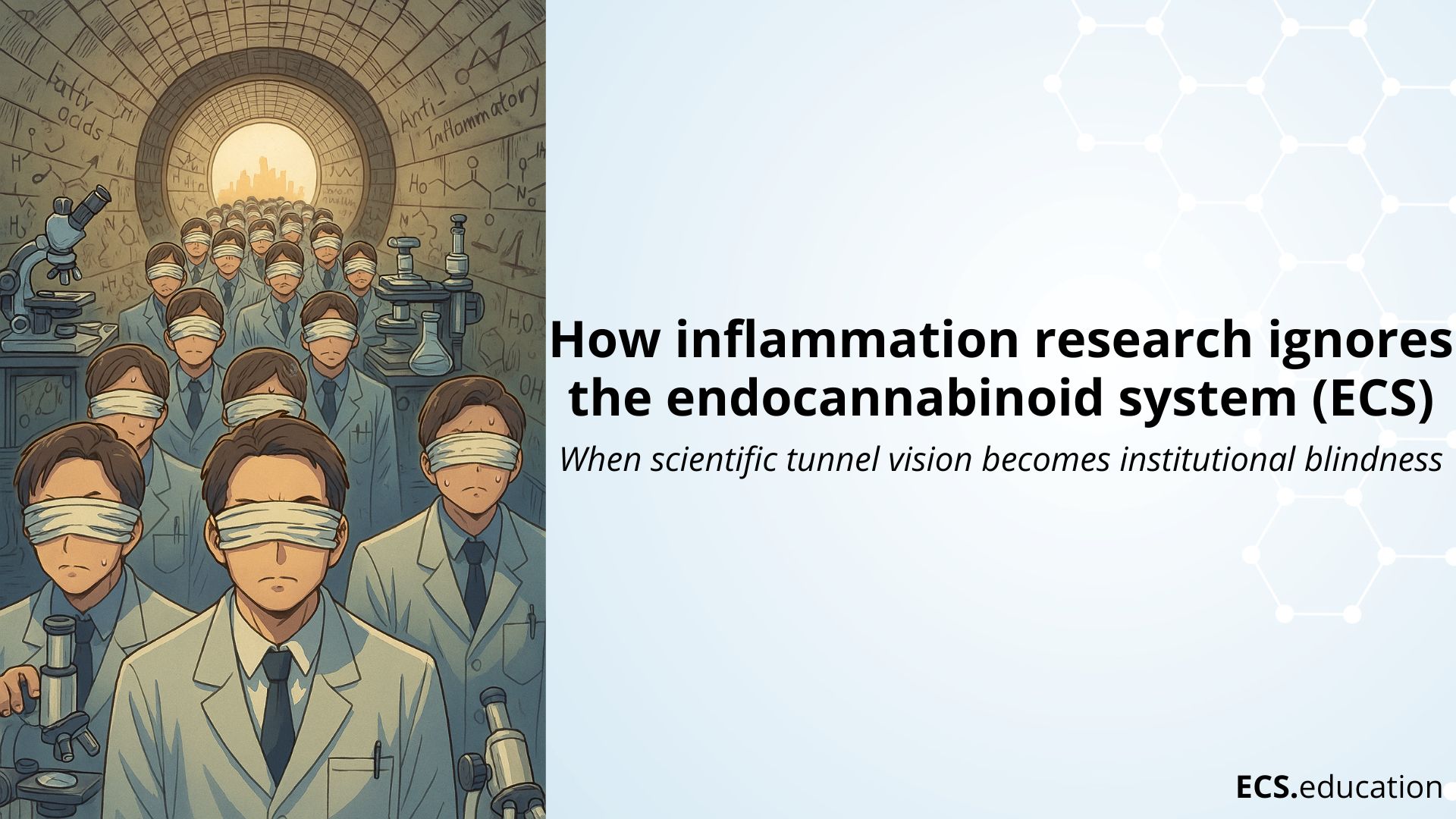
How Scientific Tunnel Vision in Inflammation Research Ignores the Endocannabinoid System (ECS)
When scientific tunnel vision becomes institutional blindness Lessons from history’s scientific blind spots Science has a troubling habit of missing the forest for the trees. For decades, gastroenterologists dismissed the idea that bacteria could cause stomach ulcers—until Barry Marshall proved Helicobacter pylori was the culprit by infecting himself. Geologists ridiculed…
Endocannabinoid System (ECS)

Read more
Obesity Rewires Your Endocannabinoid System (ECS): How Fat, Liver, Heart & Brain Are Transformed
Obesity is more than excess fat—it’s a disorder of endocannabinoid system (ECS) dysfunction. Explore how obesity rewires CB1 signaling in fat, liver, heart, and brain, driving chronic disease.
Endocannabinoid System (ECS)

Read more
The Agmatine-ECS-ASD Connection: New Hope for ASD by Boosting 2-AG and Calming the Brain
Explore groundbreaking research on agmatine’s connection to the endocannabinoid system (ECS) in Autism (ASD). Discover how it may boost 2-AG, calm brain inflammation, and offer new hope for understanding and potentially supporting ASD.
Critical analysis
Read more
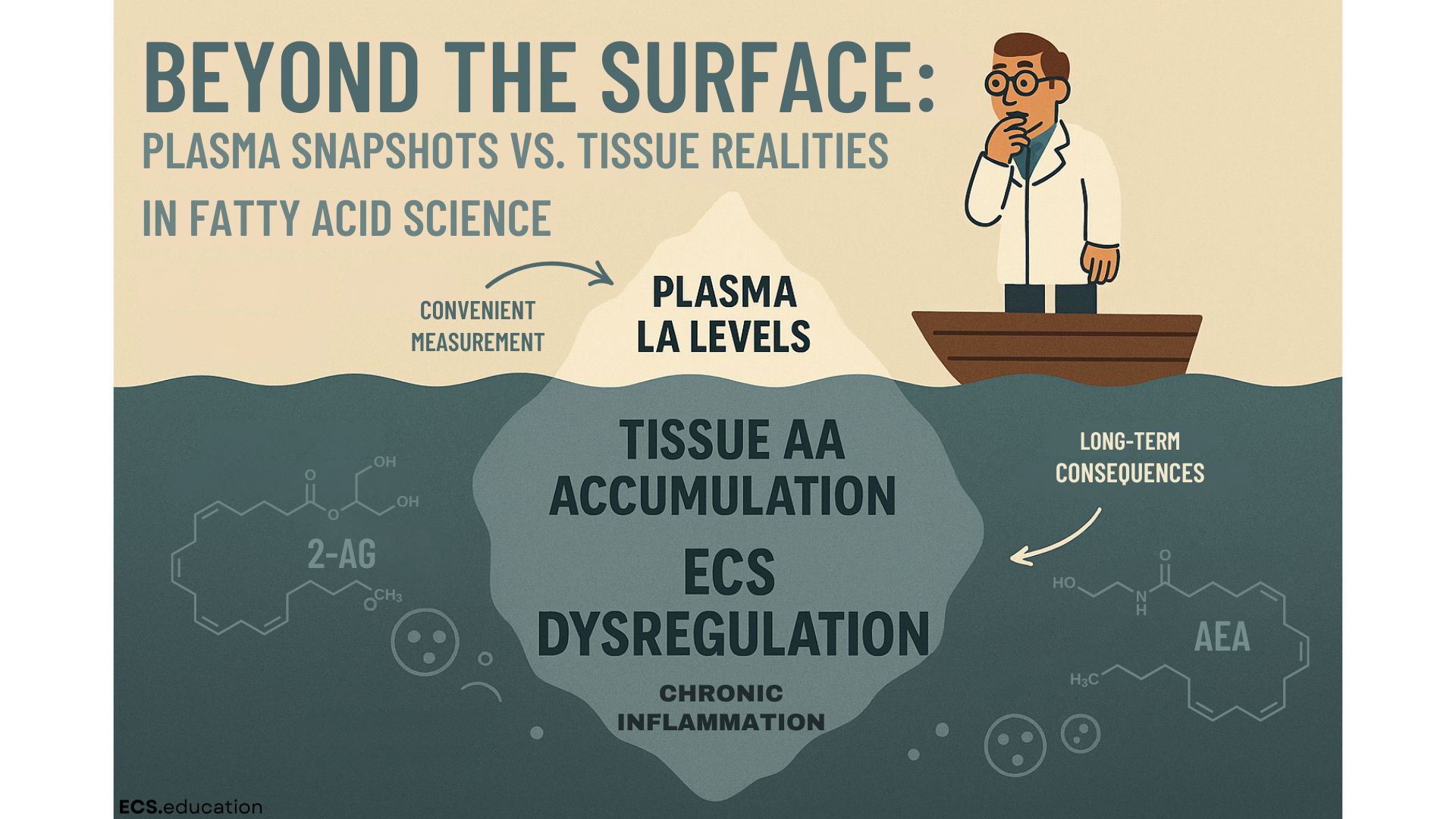
Omega-6, Mortality, and Your ECS: Unpacking the Latest UK Biobank Bombshell
A major UK Biobank study found higher plasma linoleic acid (LA) linked to lower mortality, seemingly contradicting concerns about high dietary omega-6 driving ECS dysfunction. This post unpacks the findings, distinguishing between plasma snapshots and tissue arachidonic acid (AA) realities, and explains why the omega-6/omega-3 balance and ECS perspective remain crucial for understanding metabolic health.